
A garage cleanout can come to a standstill over a few half-used paint cans. Can junk removal take paint cans? Sometimes, but the answer depends on what is inside the can. Dry latex paint is handled very differently from liquid oil-based paint, and a reputable removal crew will ask before loading either one.
For Jacksonville homeowners, renters, property managers, and small businesses, the goal is simple: clear the space without creating a disposal problem. Knowing the paint type and condition before scheduling pickup helps avoid delays, keeps pricing clear, and makes sure the material goes to the right place.
Can Junk Removal Take Paint Cans Safely?
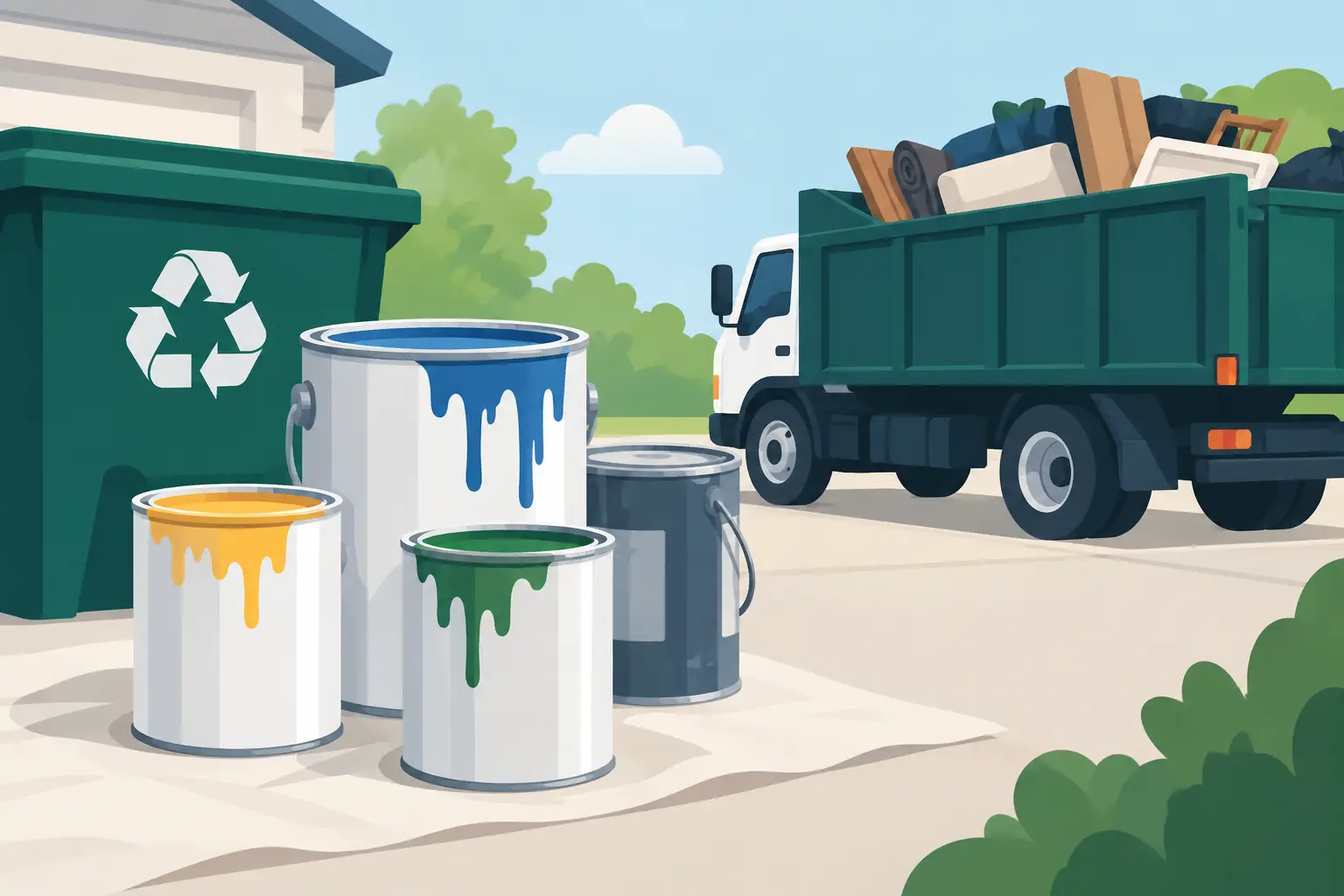
Junk removal companies can often take empty paint cans and cans containing fully dried latex paint. Once latex paint has hardened, it is generally treated more like ordinary solid waste than liquid paint. The lid should be off or loose so the contents are clearly dry, and the can should be stable enough to move without spilling.
Liquid paint is another matter. Wet paint can leak in a truck, damage other items, and require handling that a standard junk removal service is not set up to provide. Oil-based paints, stains, varnishes, solvents, and certain specialty coatings may be considered household hazardous waste. These materials usually need a designated hazardous-waste program rather than curbside trash or a routine junk pickup.
That is not a company being difficult. It is the responsible way to protect the crew, your property, and the local environment. A quick, honest description of the cans when you request service prevents surprises when the team arrives.
Start by Identifying the Paint
Look at the label before moving or opening anything. Most cans will state whether the product is water-based or oil-based and include cleanup instructions. If it says to clean brushes with soap and water, it is usually latex or another water-based coating. If it calls for mineral spirits, paint thinner, or another solvent, treat it as oil-based or solvent-based material.
Latex paint is the most common leftover from interior walls, bedrooms, and rental turnovers. A small amount can often be dried before disposal. Oil-based products need more caution, even if the can is old or mostly empty. Do not assume a dried-looking layer means the entire can is safe. There may still be liquid material underneath.
Paint in damaged, rusted, swollen, or leaking cans also deserves special attention. Place a leaking can in a larger sturdy container, keep it upright, and avoid carrying it through the house. Do not mix different paints together in an attempt to reduce the number of cans.
How to Prepare Latex Paint for Removal
If you have water-based latex paint and your removal provider confirms they can accept it once dry, solidify it before pickup. Leave the lid off in a well-ventilated area away from children, pets, drains, and ignition sources. Small amounts may dry naturally over time.
For larger amounts, use a paint hardener sold for this purpose, or mix in an absorbent material such as cat litter, sawdust, or shredded paper. Stir until there is no free-flowing liquid. The material should be firm enough that it will not pour out if the can tips over.
Never pour paint into a storm drain, sink, toilet, ditch, or yard. Jacksonville’s waterways are part of the community, and paint does not belong in them. Even water-based paint can create pollution when it enters plumbing or runoff systems.
Once the paint is completely solid, label the can if the original label is missing and keep it upright for the crew. Let the removal team know how many cans you have. A single dry can is very different from a garage shelf holding 30 cans from a renovation project.
When Hazardous-Waste Disposal Is the Better Choice
Use a local household hazardous-waste option for liquid oil-based paint, paint thinner, solvents, stains, varnishes, and similar products. Jacksonville and Duval County disposal options, accepted materials, and event schedules can change, so confirm the current requirements before making the trip.
This route may take a little more planning than a same-day haul, but it is the right trade-off for materials that need controlled handling. Keep the products in their original containers whenever possible. Make sure lids are secure, transport them upright, and do not combine chemicals.
A commercial property may have different rules than a household. Property managers clearing a unit or contractors wrapping up a small project should not assume residential hazardous-waste programs will accept business-generated material. Check the program requirements first, especially when the volume is substantial.
What About Unopened or Usable Paint?
A donation-first approach can keep usable materials out of the landfill, but paint is a special case. Some organizations may accept unopened, in-date paint in good condition, while others cannot take it because of storage limits, color demand, or safety policies. Partially used paint is even less likely to be accepted.
Call ahead before setting aside paint for donation. Never leave cans outside a donation site. Heat, rain, and damaged containers can turn a usable item into a cleanup issue.
If the paint is still usable, another practical option is to save it for touch-ups. Clearly mark each can with the room, color, date, and finish. If you no longer need it, ask neighbors, friends, or a local community group whether they can use it. Only share paint that is properly sealed, accurately labeled, and still in good condition.
Questions to Ask Before You Book Junk Removal
Paint cans should be disclosed during the initial call or quote request, not discovered after the crew has loaded everything else. Tell the company whether the cans are empty, dry, or liquid; whether they are latex or oil-based; and whether any are leaking. Photos can also help a provider determine what can be safely removed.
Ask whether paint cans are included in the quoted load, whether there is a separate handling charge, and what preparation is required. Honest pricing starts with clear information on both sides. A low quote that ignores restricted items is not useful if it changes at the curb.
For a full garage, estate, rental, or post-renovation cleanout, separate paint from the rest of the junk before the appointment. Keep it in one visible area rather than burying it behind furniture, boxes, or appliances. That helps the crew work faster and gives everyone a chance to verify the material before loading.
Paint Can Mistakes That Create Bigger Problems
The most common mistake is putting liquid paint into regular trash. A trash bag can tear, a can can open during collection, and wet paint can spread across a truck or transfer station. It also creates an avoidable mess for sanitation workers.
Another mistake is treating all coatings alike. Spray paint, automotive paint, epoxy, marine coatings, and industrial finishes may contain ingredients that need different disposal methods. The label matters more than the color of the can or the age of the product.
Finally, do not rely on guesswork if a can has no label. Set it aside as unknown material and ask your local hazardous-waste program for guidance. The safest decision is usually the least convenient one, but it is far easier than cleaning up a spill or dealing with a rejected load.
When you are ready to clear out the rest of the garage, rental, office, or storage area, Extra Mile Junk Removal can help with the items that are appropriate for professional hauling. Set paint aside first, share the details up front, and handle restricted cans through the proper channel. That small bit of preparation keeps your cleanout moving and helps Jacksonville stay cleaner, too.