

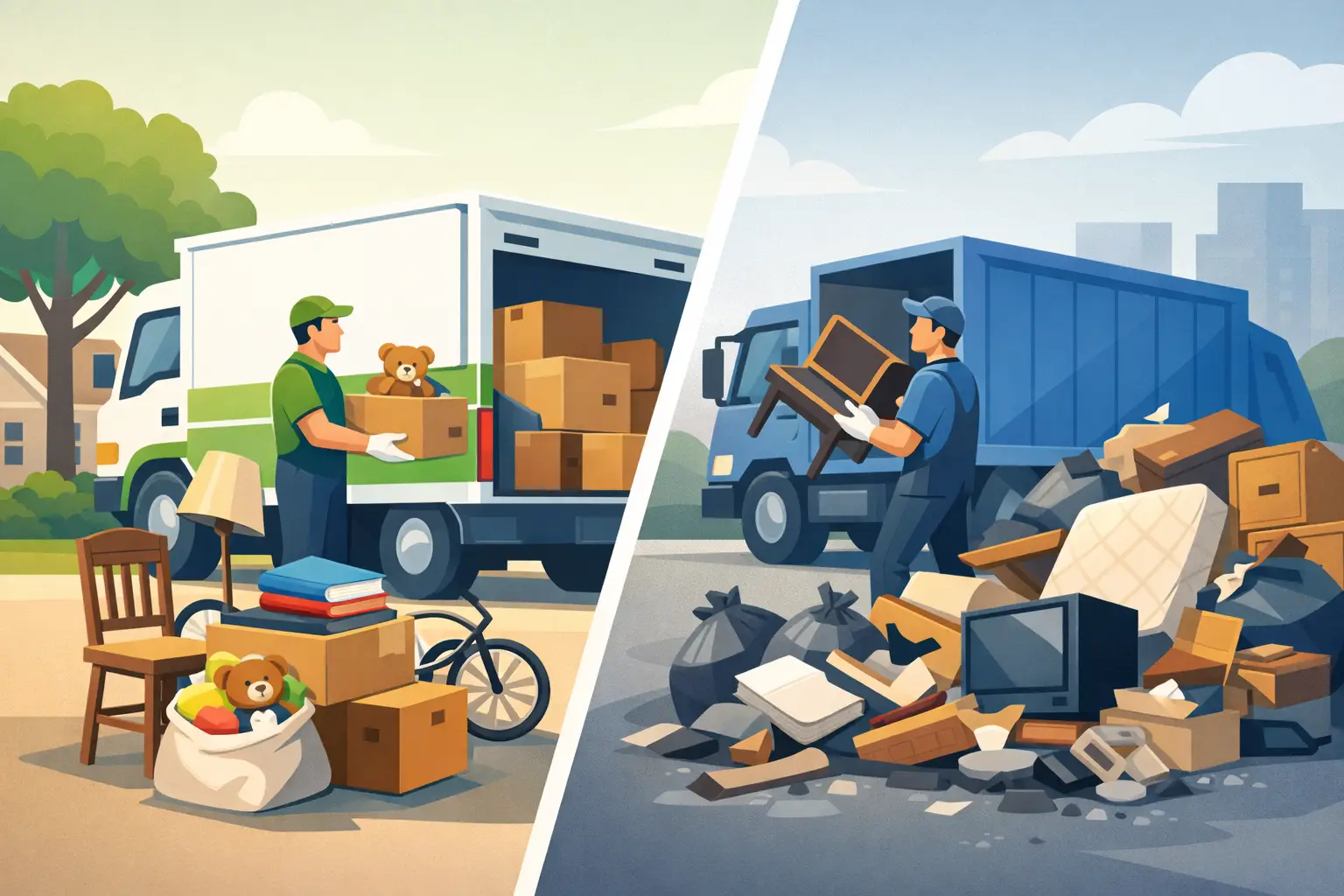
A couch that still looks good, a garage full of boxes, and a move-out deadline can create the same question: should you schedule a donation pickup or hire a junk removal crew? Donation pickup vs junk removal is not simply a question of cost. It comes down to item condition, timing, labor, and whether a charity can actually use what you need gone.
For Jacksonville homeowners, renters, property managers, and small business owners, the right choice can save time and keep usable items out of the landfill. The wrong choice can leave a pile sitting in the driveway while a deadline gets closer.
Donation Pickup vs Junk Removal: The Core Difference
Donation pickup is designed for items a nonprofit or charitable organization can resell, distribute, or put to use. In many cases, the organization sets strict acceptance rules. Furniture generally needs to be clean and structurally sound. Appliances may need to work. Clothing, housewares, and electronics must be in acceptable condition and meet the organization’s current needs.
Junk removal is built for the broader job. A professional crew removes unwanted items whether they are donation-worthy, recyclable, or ready for disposal. That includes broken furniture, old mattresses, renovation debris, bagged clutter, damaged appliances, and mixed loads from a garage, attic, storage unit, or rental turnover.
The key difference is simple: donation pickup is selective, while junk removal handles the full cleanout. A donation-first junk removal company can often make both work together by separating reusable items from the rest.
When Donation Pickup Makes Sense
Donation pickup can be a strong option when you have a small number of clean, usable items and your schedule is flexible. If you are replacing a working dining set, clearing out gently used clothing, or passing along household goods after a move, donating can give those items another purpose.
It works best when the items are already easy to access. Many donation organizations require furniture and boxes to be placed at the curb, in a garage, or near the front door. They may not enter the home, climb stairs, disassemble furniture, or move heavy pieces around tight hallways.
Donation pickup also depends on availability. Charities often book several days or weeks in advance, and they may cancel or decline a pickup if the items do not meet their standards when the driver arrives. That does not make donation a bad option. It simply means it is not always the best fit for an urgent cleanout.
If you have time, a clear list of accepted items, and items in good condition, donation pickup can be a practical choice. Just confirm the organization’s requirements before you spend time hauling everything to the curb.
When Junk Removal Is the Better Call
Junk removal is usually the better choice when you need the space cleared quickly or when the load includes a mix of usable and unusable items. This is common after a renovation, tenant move-out, estate cleanout, storm cleanup, or last-minute move.
A professional crew can do the lifting, loading, sorting, and hauling. You do not have to rent a truck, find help for a heavy sectional, or make multiple trips to donation centers and disposal sites. That matters when you are dealing with stairs, bulky furniture, packed storage areas, or a property that needs to be ready for sale or new tenants.
Junk removal is also more reliable for items donation organizations commonly decline. Mattresses, damaged particle-board furniture, heavily worn upholstery, broken electronics, construction materials, and loose household debris may not qualify for donation. A removal crew can take care of the whole pile instead of leaving you with the rejected portion.
For property managers and real estate professionals, speed is often the deciding factor. Every extra day a unit, home, office, or storage space stays cluttered can delay cleaning, repairs, showings, or turnover. Same-day service can be worth far more than waiting for a free pickup window.
Cost: Free Pickup Is Not Always the Lowest-Cost Option
Donation pickup may be free, which is appealing when every item is accepted and ready to go. But free does not always mean easier or less expensive overall. If you need to move furniture outside, hire help, rent a truck for rejected items, or lose time waiting for an appointment, the savings can disappear.
Junk removal is a paid service, but the price covers labor, loading, transportation, sorting, and responsible disposal. Honest pricing should be clear before work begins, based on the volume of items and the effort required to remove them. For many customers, that predictable cost is preferable to handling the job in stages.
Consider the total cost of the project, not just the pickup fee. If you are physically able to prepare a few good items and can wait for a charity’s schedule, donation may be the most economical route. If the job is large, urgent, heavy, or mixed, professional removal is often the more efficient investment.
A Donation-First Approach Still Works for Mixed Loads
You do not have to choose between doing good and getting the job done. Most real cleanouts contain a mix: a usable dresser, a working lamp, bags of clothing, an old recliner, broken shelving, and years of garage clutter. Trying to arrange separate solutions for every category can turn one project into a week of errands.
A donation-first junk removal service assesses what can be reused or donated and removes the rest in one visit. That approach helps divert suitable items from the landfill without putting the burden of sorting, lifting, and coordinating pickups on you.
There are limits. No responsible company can promise that every item will be donated. Donation partners have their own standards, capacity, and changing needs. Items that are unsafe, unsanitary, damaged, or prohibited must be handled through the appropriate disposal or recycling route. The goal is responsible handling, not unrealistic guarantees.
Questions to Ask Before You Schedule
Before booking either option, take a quick look at the condition of your items and the deadline you are working against. Ask yourself whether the furniture is clean, stable, and usable; whether you can get it to the pickup location; and whether you can wait for a scheduled donation window.
Then think about the rest of the load. A single usable couch may be easy to donate. A couch plus old paint cans, a broken bed frame, boxes of miscellaneous items, and a garage full of debris is a junk removal job. Being realistic at the start prevents surprise refusals and wasted weekends.
It also helps to ask a removal provider how pricing is determined, whether labor is included, and what happens to items that are still in usable condition. Straight answers matter. You should know what you are paying for before the crew starts loading.
The Best Choice Depends on Your Deadline and Your Load
Choose donation pickup when you have a manageable number of quality items, easy access, and enough time to work within a charity’s schedule. Choose junk removal when you need fast results, hands-on labor, or one solution for everything that needs to go.
For many Jacksonville cleanouts, the practical answer is a service that can remove the full load while making a good-faith effort to donate what qualifies. Extra Mile Junk Removal takes that donation-first approach with honest pricing and the responsive service stressful projects demand.
The next time unwanted items start taking over a room, do not let a perfect donation plan delay the cleanout. Keep the usable items in circulation when possible, clear the rest responsibly, and get your space back on your timeline.