
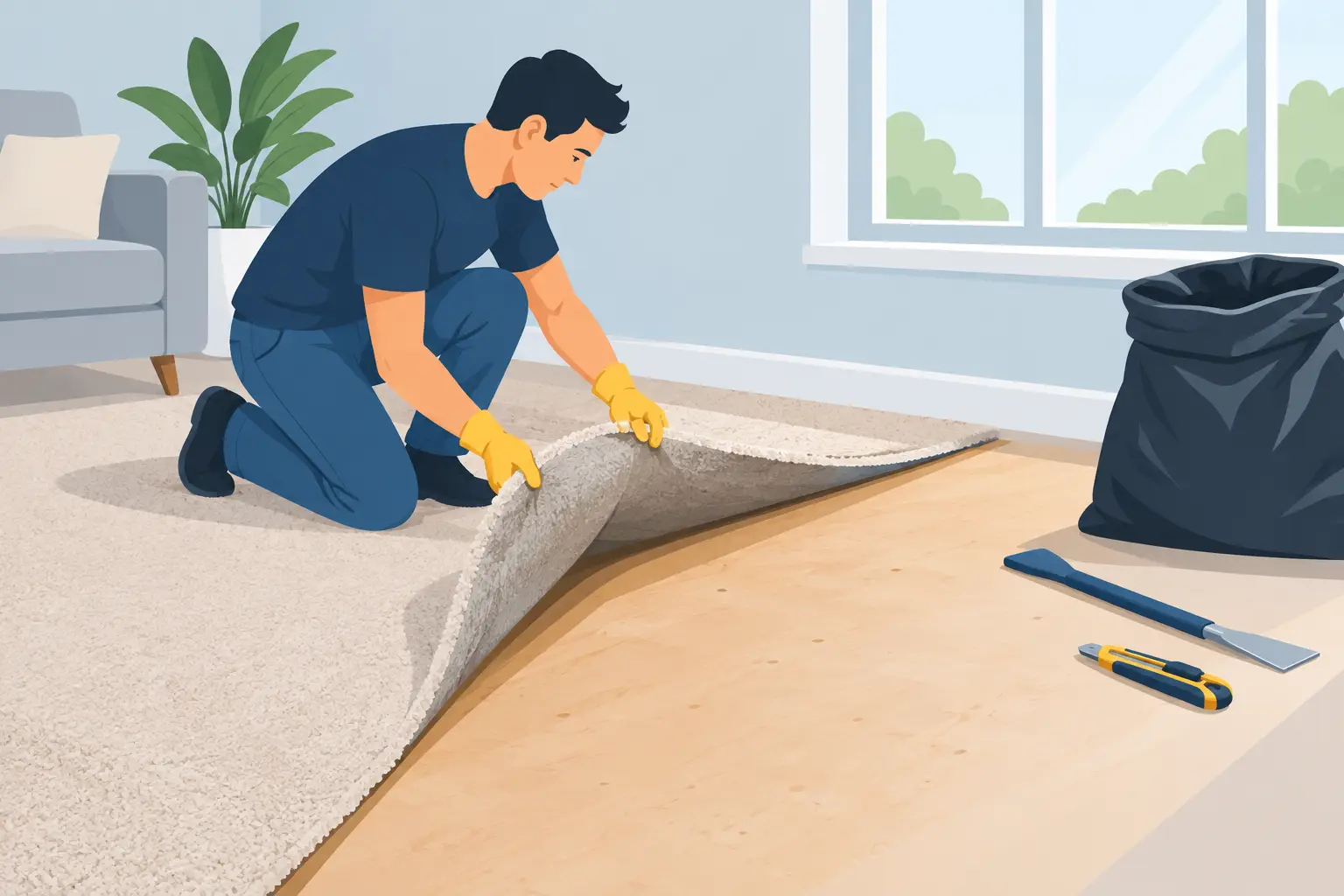
That old carpet can hold years of dust, pet hair, stains, and odors - and once you decide it has to go, you probably want it out fast. Learning how to remove old carpet is manageable for many homeowners, but the job involves sharp tack strips, heavy rolls, hidden staples, and more debris than most people expect.
Whether you are refreshing one room, preparing a rental between tenants, or getting a property ready to sell in Jacksonville, a little planning prevents a frustrating cleanup. The goal is not just to pull up the carpet. It is to leave behind a clean, safe floor that is ready for whatever comes next.
Before You Remove Old Carpet, Check What Is Under It
Start by looking at a corner of the room, preferably inside a closet or along a wall where any damage will be less noticeable. Pull the carpet edge back just enough to see the padding and subfloor. In some older homes, carpet may cover hardwood, tile, or vinyl that you want to preserve. In others, you may find stained padding, damaged subflooring, or signs of moisture.
If you see dark staining, a persistent musty smell, soft spots in the floor, or visible mold, pause before tearing out the entire room. Carpet can hide water damage from a past leak or humidity problem. Removing the flooring without addressing the source may mean installing new materials over an active issue.
Also consider the age of the home and the materials underneath. Older vinyl flooring and adhesives may require extra care. If you are unsure whether a material is safe to disturb, get professional guidance before scraping or sanding it.
Gather the Right Tools First
Carpet removal does not require specialized equipment, but the right basic tools make a major difference. Wear work gloves, long pants, closed-toe shoes, and eye protection. Knee pads are useful, especially when you are working on padding and staples.
For most rooms, you will need a utility knife with fresh blades, locking pliers, a pry bar, a hammer, a staple remover or flat-head screwdriver, and a heavy-duty broom or shop vacuum. A floor scraper can help with stubborn padding residue. Keep a few contractor bags available for small debris, but do not expect standard trash bags to hold an entire carpet removal project.
Before cutting anything, remove furniture, floor vents, doors that swing into the room, and fragile items from nearby areas. Open windows when possible. Old carpet often releases dust as it is moved, even when it looked clean on the surface.
How to Remove Old Carpet Step by Step
Carpet is usually held in place by tack strips around the perimeter of the room. The carpet stretches over these narrow wood strips, which have angled metal pins designed to grip the backing. Those pins are sharp, so work slowly along the edges.
Start at a Corner
Use locking pliers to grip a loose carpet edge at a corner. Pull upward and back toward the center of the room. Do not yank straight up with your hands. Once the carpet releases from the tack strip, you can usually pull it away along one wall with steady force.
If the carpet feels difficult to handle, cut it into strips about 3 to 4 feet wide. Fold each section inward as you go. Smaller rolls are easier to carry, easier to load, and less likely to scrape walls or damage door frames.
Cut from the back side of the carpet whenever you can. The backing is easier to slice than the pile, and it gives you a cleaner cut. Keep the blade shallow. You do not want to cut into hardwood, vinyl, or the subfloor below.
Remove the Padding Separately
The carpet pad is usually attached with staples, adhesive, or both. Pull it up in sections after the carpet is out. Foam padding often tears, especially near staples, so do not worry if it comes up in smaller pieces.
For staples, use a scraper, pry bar, or staple remover to work them loose. Take the time to remove them thoroughly. Leftover staples can puncture new flooring, create bumps under fresh carpet, and slow down installers.
Adhesive-backed padding takes more effort. A long-handled floor scraper may lift most of the material, but some residue can remain. What to do next depends on the floor you plan to install. New carpet may tolerate minor residue, while vinyl plank, tile, or hardwood usually needs a smoother and cleaner surface.
Handle Tack Strips With Care
Tack strips remain around the edges after the carpet is removed. If you are installing new carpet, an installer may be able to reuse them if they are secure and in good condition. If you are changing to another type of floor, they generally need to come out.
Place a pry bar beneath the strip near a nail, then lift gently with a hammer. Work in short sections rather than trying to pry up a full length at once. Tack strips can break apart, and the exposed pins can cause injuries if you rush.
Watch for tack strips near thresholds and stairs. These areas are often tightly fastened and may sit next to finished flooring you want to protect. A small piece of plywood or a wide putty knife under your pry bar can reduce the chance of gouging the floor.
Clean and Inspect the Floor Before Moving On
Once the carpet, pad, staples, and tack strips are gone, vacuum the entire area slowly. Sweep first if needed, then vacuum again. Dust, grit, and small wood fragments tend to collect along walls and in corners.
This is the best time to inspect the floor for squeaks, cracks, uneven spots, pet stains, or damage around doors and windows. On a wood subfloor, look for loose nails and screw heads that sit above the surface. Secure loose panels before installing new flooring.
If you uncovered hardwood, do not assume it is ready for use just because it looks promising. It may need repairs, deep cleaning, stain removal, or refinishing. Still, finding original hardwood can be worth the extra effort, particularly in an older home.
Know When DIY Carpet Removal Is Not the Best Option
Removing carpet yourself saves labor costs, but it is not always the easiest or safest choice. Large rooms, multiple floors, heavily soiled carpet, and staircases can turn a simple project into a physically demanding job. Wet or urine-saturated carpet is especially unpleasant to handle and may be much heavier than expected.
Property managers and real estate professionals often face a different problem: timing. When a tenant has moved out, a closing date is near, or renovation crews are scheduled, the carpet cannot sit in the driveway for a week while you figure out disposal.
Professional removal can make more sense when you need the material gone quickly, want help carrying heavy rolls, or have other renovation debris to clear at the same time. Extra Mile Junk Removal provides Jacksonville customers with same-day service when available, honest pricing, and a donation-first approach for items that can be reused. Carpet itself is usually not a donation item, but clearing reusable furniture, fixtures, or household goods at the same time can keep more material out of the landfill.
Plan Disposal Before You Start Pulling
Old carpet is bulky. A single room can create several heavy rolls, padding, tack strips, and bags of debris. Check local disposal rules before beginning, because curbside collection may not accept carpet rolls or may require them to be cut and bundled to a certain size.
If the carpet is dry and relatively clean, some facilities may accept it for recycling, depending on the material and local availability. Carpet with mold, extensive pet contamination, or water damage may need to be disposed of as regular construction debris. Keeping carpet separate from reusable household items makes sorting and hauling more efficient.
Do not leave sharp tack strips loose in a pile. Bundle them, place them in a rigid container, or tape them securely before disposal. The same goes for utility knife blades and loose staples. A clean work area protects you, your family, and anyone handling the debris afterward.
A Cleaner Start for the Room Ahead
Carpet removal is one of those jobs where preparation does most of the work. Cut the carpet into manageable sections, protect yourself from tack strips and staples, inspect what the carpet was hiding, and have a disposal plan before the first roll comes up.
Once the old material is out, the room changes fast. You can see the repairs that need attention, make a better flooring decision, and move one step closer to a cleaner, more usable space.