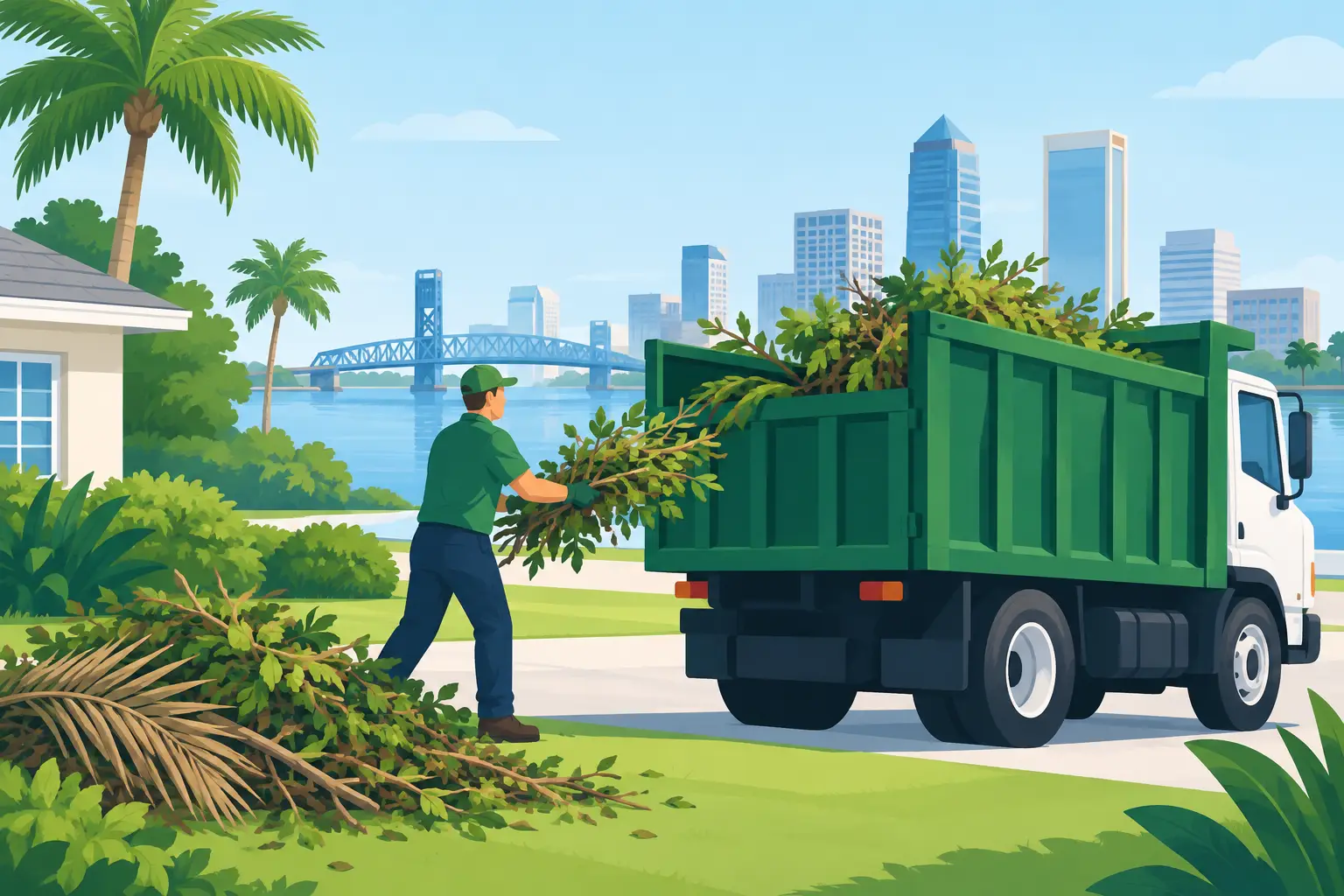
A Jacksonville storm can turn a tidy yard into a pile of limbs overnight. Add a weekend trimming project, a fallen palm frond, or an overgrown hedge, and the cleanup can quickly outgrow your trash cart. Jacksonville yard waste removal gives homeowners, landlords, and property managers a practical way to get the mess cleared without spending days cutting, hauling, and making repeated trips.
The right removal service does more than load a pile into a truck. It saves time, helps keep a property safe and presentable, and handles material with a responsible disposal plan. For urgent cleanups, clear communication and dependable scheduling matter just as much as the hauling itself.
When Yard Waste Becomes a Hauling Job
A few bagged clippings are one thing. Large branches, thick brush, heavy logs, and storm debris are another. Once material is too bulky for regular collection, too heavy to move safely, or too large to fit in a personal vehicle, professional pickup is often the more efficient choice.
This is especially true after severe weather. Downed limbs can block walkways, scratch vehicles, damage fences, and create hazards for children, pets, tenants, or customers. Waiting for a pickup window may not work when you need a driveway, sidewalk, or rental property cleared now.
Yard waste removal is also useful after landscape work. Tree trimming, shrub removal, sod replacement, and backyard cleanup projects create more material than most people expect. The work may take an afternoon, but loading, securing, transporting, and unloading the debris can take far longer.
Property managers and real estate professionals face another version of the same problem. A neglected yard can affect curb appeal before a showing or leave a poor first impression for a new tenant. Fast removal helps move a property from “needs work” to ready for the next step.
What Counts as Yard Waste?
Most yard debris is straightforward: branches, brush, leaves, grass clippings, small logs, palm fronds, vines, and plant trimmings. These are the materials that commonly pile up after routine maintenance or storm cleanup.
The details matter, though. Dirt, rocks, concrete, railroad ties, treated lumber, fencing, and construction debris may require different handling because they are heavier or are not organic yard waste. The same goes for hazardous materials, chemicals, paint, and fuel containers. A reputable company should explain what it can take before arriving, rather than leaving you with a surprise once the crew is on site.
If your pile includes both green waste and other unwanted items, describe that clearly when requesting a quote. A mixed load may still be easy to remove, but honest information helps the crew bring the right equipment and give you a more accurate price.
Jacksonville Yard Waste Removal After a Storm
Storm debris is rarely neat. It can include tangled branches, wet leaves, snapped limbs, and piles spread across a yard. Wet vegetation weighs more than it looks, and large limbs can shift unexpectedly when lifted. That is where a professional crew can reduce the strain and safety risk.
Start by checking for immediate hazards. Keep clear of downed power lines, unstable trees, and limbs resting on roofs, vehicles, or structures. If a tree or branch is still under tension, do not try to force it apart with a saw or pull it free with a vehicle. Those situations may call for a qualified tree professional before debris removal begins.
For material that is already on the ground and safe to access, gathering smaller loose debris into one general area can help. It is not required, but it can make the pickup faster. Do not worry about creating perfectly sized bundles if the pile is substantial. The goal is a clear description of what needs to go.
Same-day service can make a real difference after weather moves through Jacksonville. Quick pickup helps restore access to your property and keeps a manageable cleanup from becoming a soggy, scattered mess.
Why DIY Hauling Is Not Always the Bargain
Doing the work yourself can make sense for a small, dry pile that fits safely in your vehicle. If you have the time, the proper tools, and an approved place to take the material, a DIY trip may be enough.
But large cleanups have hidden costs. There is fuel, vehicle loading, disposal fees, protective gear, and the chance of damage to a truck or SUV interior. Then there is the physical work. Awkward branches can scratch paint, puncture tires, and cause strains when lifted incorrectly. Multiple trips can turn what looked like a money-saving plan into a full-day project.
Professional removal is usually the better fit when the pile is large, the debris is wet or heavy, access is difficult, or time is limited. It is also a smart choice when you are preparing for a move, handling an estate cleanout, managing a turnover, or trying to get a property back in shape quickly.
What Fair Pricing Should Look Like
Yard waste removal pricing should be clear before the work starts. The cost often depends on how much space the debris takes up, how heavy it is, what materials are included, and how accessible the pile is. A small pile near the curb is different from a large load behind a fence or across a steep backyard.
Ask for an on-site quote or a clear estimate based on photos and details. You should know what is included in the price and whether there are factors that could change it. Honest pricing is not just about getting a low number. It is about knowing what you are paying for and avoiding vague charges after the truck is loaded.
A dependable service should also respect your property. That means arriving within the agreed window, confirming the scope of the job, loading efficiently, and doing a final sweep for loose debris. Fast service should not mean rushed or careless service.
Responsible Disposal Matters
Yard debris does not always belong in a landfill. Depending on the material and local options, green waste may be processed, mulched, composted, or otherwise diverted from the regular waste stream. The right approach depends on what is in the load and where it can be accepted.
That same responsible mindset matters for mixed cleanups. If a yard project also leaves behind usable outdoor furniture, tools, planters, or other items, donation-first removal can help keep suitable goods in use when practical. Not everything can be donated, and damaged materials need appropriate disposal, but it is worth asking before assuming every item is trash.
Extra Mile Junk Removal brings that community-minded approach to local hauling, with straightforward service, honest pricing, and an effort to donate usable items when possible. For yard debris, the focus remains simple: remove it safely, keep the process clear, and use responsible disposal channels whenever available.
How to Make Pickup Faster
You do not need to do the crew's job before they arrive. A few simple preparations can make the appointment smoother. Keep gates unlocked or provide access instructions, move vehicles away from the loading area, and point out any materials that should stay. If there are hidden obstacles in tall grass or near the pile, mention those as well.
It also helps to separate obvious non-yard items when possible. A pile that includes branches, old fencing, bags of soil, and a broken grill may require more than a standard green waste pickup. Clear communication lets the crew plan for the real job, not just the photo-friendly part of it.
For recurring maintenance, do not wait until a pile becomes unmanageable. Scheduling removal after major trimming or seasonal cleanup can keep your yard usable and prevent debris from becoming a pest or mold problem during wet weather.
A clean yard makes a property safer, more usable, and easier to enjoy. When the branches are too heavy, the pile is too big, or the cleanup needs to happen today, choose a removal team that shows up ready to work and leaves you with room to breathe again.