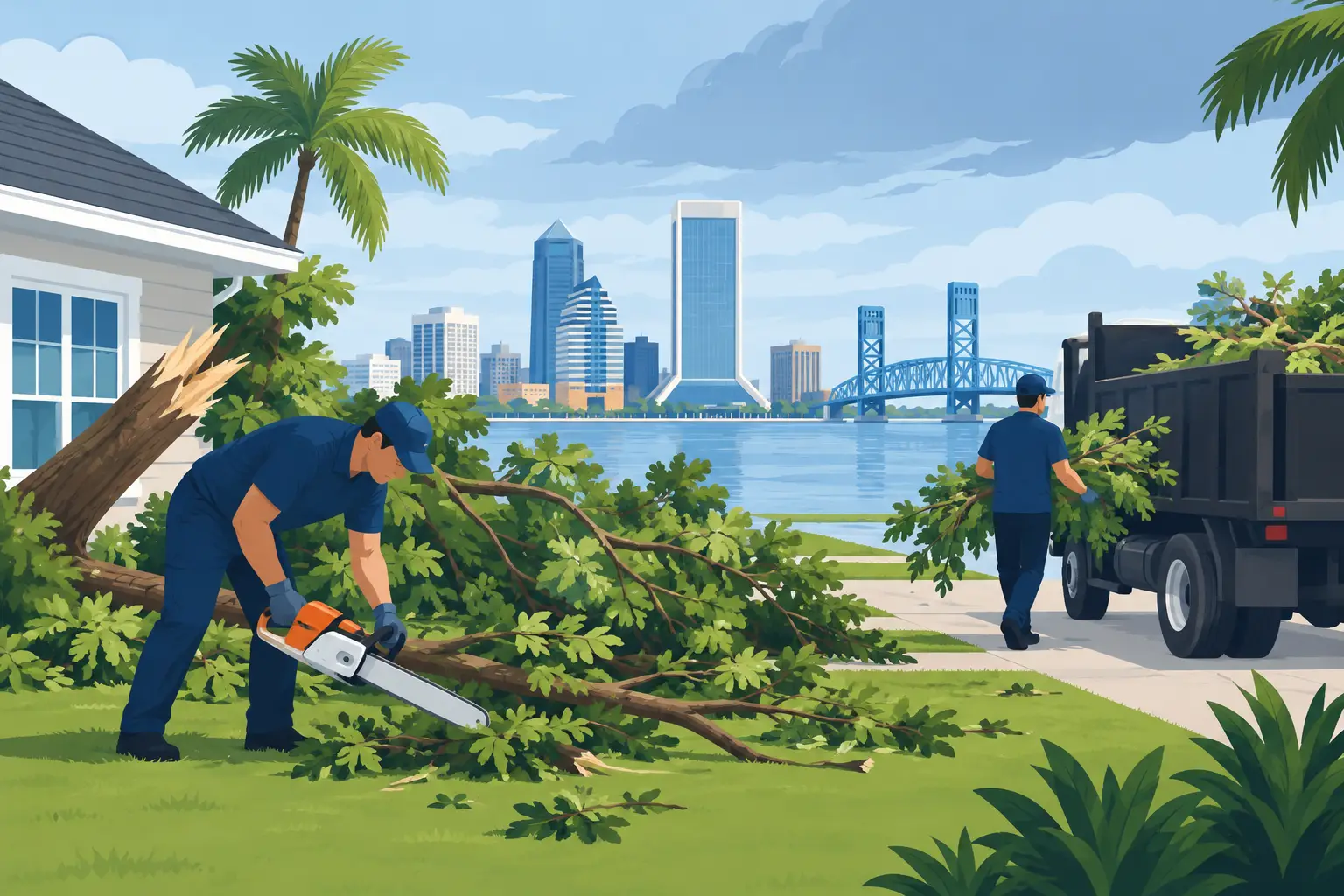
A real storm cleanup example starts before anyone touches a fallen branch or drags soaked furniture to the curb. After a strong Jacksonville storm, the priority is simple: make the property safe, document the damage, and clear what can be removed without creating a bigger problem.
For homeowners, renters, property managers, and small business owners, storm debris can turn a manageable mess into a blocked driveway, unsafe walkway, or delayed repair project. A clear plan helps you move quickly while keeping costs, safety, and responsible disposal in view.
A Storm Cleanup Example: From Damage to Clear Space
Picture a Jacksonville homeowner after a summer thunderstorm. High winds have knocked down several limbs, a section of fence has broken apart, and rainwater has ruined a pile of cardboard boxes and an old recliner stored in the garage. The driveway is partly blocked, and the homeowner needs a roofing contractor to inspect the property the next morning.
The first call should not be to a junk hauler. The homeowner checks for immediate hazards: downed power lines, damaged utility equipment, standing water near electrical outlets, sharp debris, and unstable trees or branches. If there is any concern about electrical service, gas lines, or a large tree leaning on a structure, the right move is to contact the utility provider, emergency services, or a qualified tree professional.
Once the area is safe, the homeowner takes photos and videos of damaged items, fencing, and affected areas. This documentation can help with insurance questions and contractor estimates. It is much easier to sort out claims before debris is loaded and hauled away.
Next comes separation. The homeowner sets aside intact patio chairs, tools, and household goods that only need drying or cleaning. Broken fence panels, water-damaged cardboard, ruined furniture, loose branches, and nonhazardous debris are placed in separate piles where possible. That makes pickup faster and helps keep reusable items from being treated as trash.
A professional junk removal team can then remove the nonhazardous debris, clear access points, and leave the space ready for the next step. In this example, the goal is not to make every repair in one day. It is to restore safe access and remove the damaged material that is in the way.
Start With Safety, Not Speed
Fast cleanup matters after a storm, but rushing into an unsafe area can lead to injury or additional property damage. Storm debris is often heavier, sharper, and less stable than it looks. Wet furniture can be difficult to lift. Broken wood may have exposed nails. Limbs can be under tension and shift suddenly when moved.
Keep children and pets away from the work area. Wear closed-toe shoes, work gloves, and eye protection when handling debris. Avoid climbing on wet roofs, ladders, or unstable piles. If the cleanup involves large trees, damaged roofing, electrical equipment, chemicals, sewage, or structural damage, bring in the appropriate specialist.
Junk removal is a practical solution for hauling clutter and debris, but it does not replace emergency responders, electricians, plumbers, mold remediation crews, or licensed tree services. Knowing the difference protects your property and the people working on it.
Sort Debris Before Scheduling Pickup
You do not need a perfect sorting system, but a little organization saves time. It also helps you understand what should stay, what should be documented, and what can go.
Start by making three areas: items to keep, items to photograph for insurance, and items ready for removal. If an item is damp but potentially salvageable, move it to a dry, ventilated area if it is safe to do so. Do not assume everything wet is automatically garbage. Family photos, tools, solid-wood furniture, and certain electronics may be worth evaluating first.
For the removal pile, keep ordinary household debris together when possible. This can include ruined furniture, broken shelving, damaged boxes, loose household items, and small nonhazardous debris. Separate materials that need special handling. Paint, fuel, pesticides, batteries, chemicals, propane tanks, medical waste, and other hazardous materials should not be mixed into a general junk pile.
Yard debris can be a separate issue. A few small branches may be easy to manage, while a large fallen tree requires a tree crew with the right equipment. It depends on the size, location, and whether the debris is tangled with fencing, roofing, or utility lines.
Make Room for Repairs and Recovery
The best post-storm cleanup plan focuses on access. Contractors need room to work. Inspectors need a clear path. Residents need a safe way to enter and leave the property.
Clear the driveway, front walk, garage entry, and any path leading to damaged areas. If a broken fence panel is lying across a shared walkway or a pile of soaked belongings is blocking the garage, those are good priorities for removal. Clearing these spaces early can prevent minor damage from turning into a bigger delay.
For rental properties, communicate clearly with tenants before entering units or removing items. Document the condition of the space and confirm which belongings are damaged, abandoned, or scheduled for disposal. Property managers often face tight turnover deadlines after a storm, so a same-day removal option can make a real difference when crews need the space cleared quickly.
Small businesses should take the same approach. Remove damaged nonessential items only after documenting losses and confirming what must be retained for insurance, accounting, or equipment replacement. A fast haul-away can help reopen storage areas, back entrances, and customer-facing spaces, but accurate records still come first.
What Honest Storm Cleanup Pricing Should Look Like
Storm cleanup costs depend on volume, labor, access, and the type of material being removed. A few bags of damaged household items are different from a garage full of waterlogged furniture. A curbside pile is usually easier to load than debris scattered behind a fence or up a flight of stairs.
Ask for pricing that is explained before work begins. A clear quote should account for the amount of debris, loading effort, and any disposal requirements. Be upfront about heavy items, wet materials, tight access, or debris that may require extra labor. Surprises on either side slow down the job.
The cheapest option is not always the best value. A low price can become expensive if the provider does not show up, leaves debris behind, or treats usable items as landfill waste without consideration. A dependable team should give you a straightforward assessment and remove what it agrees to remove.
Donation-First Thinking Still Has a Place
After a storm, not everything outside belongs in a disposal pile. Items that are clean, intact, and usable may still be candidates for donation or reuse. That could include undamaged household goods moved out of a garage, furniture that was never exposed to water, or supplies left over from a cleanup project.
The trade-off is condition. Water-damaged, moldy, contaminated, or structurally broken items are not suitable for donation. Trying to save unusable materials can create a health issue or shift disposal work onto a nonprofit. Responsible cleanup means recognizing the difference.
A donation-first approach works best when it is practical: save what is safe and useful, then remove the rest promptly. That keeps recovery moving without creating unnecessary waste.
When to Call for Professional Hauling
Call for help when the debris is too heavy, too bulky, too widespread, or too time-consuming to manage safely. This is especially true when a cleanup is holding up repairs, a move, tenant turnover, or business operations. Same-day service can be useful when you need a clear driveway, garage, office, or rental unit without waiting through another weekend.
Extra Mile Junk Removal helps Jacksonville customers remove unwanted, nonhazardous storm-related items with honest pricing and a practical donation-first mindset. The job begins with understanding what needs to go, what needs special handling, and what should be kept for documentation or recovery.
After the immediate mess is gone, take one more walk around the property. Look for loose materials, blocked drains, hidden water damage, and anything that could become a problem in the next rain. A clean space is helpful, but a safer path forward is the real goal.