A garage cleanout can leave you staring at furniture, boxes, and household goods that still have plenty of life left. So, do junk removal companies donate items? Many do, but the honest answer is that it depends on the company, the condition of the items, and whether a local donation partner can accept them.
A responsible junk removal service should not treat every pickup as landfill material. At the same time, no company can promise that every item will be donated. Donation centers have standards, space limits, and safety rules. The best approach is a donation-first process: identify usable items, separate them from true waste, and make the most responsible disposal decision available.
Do Junk Removal Companies Donate Items?
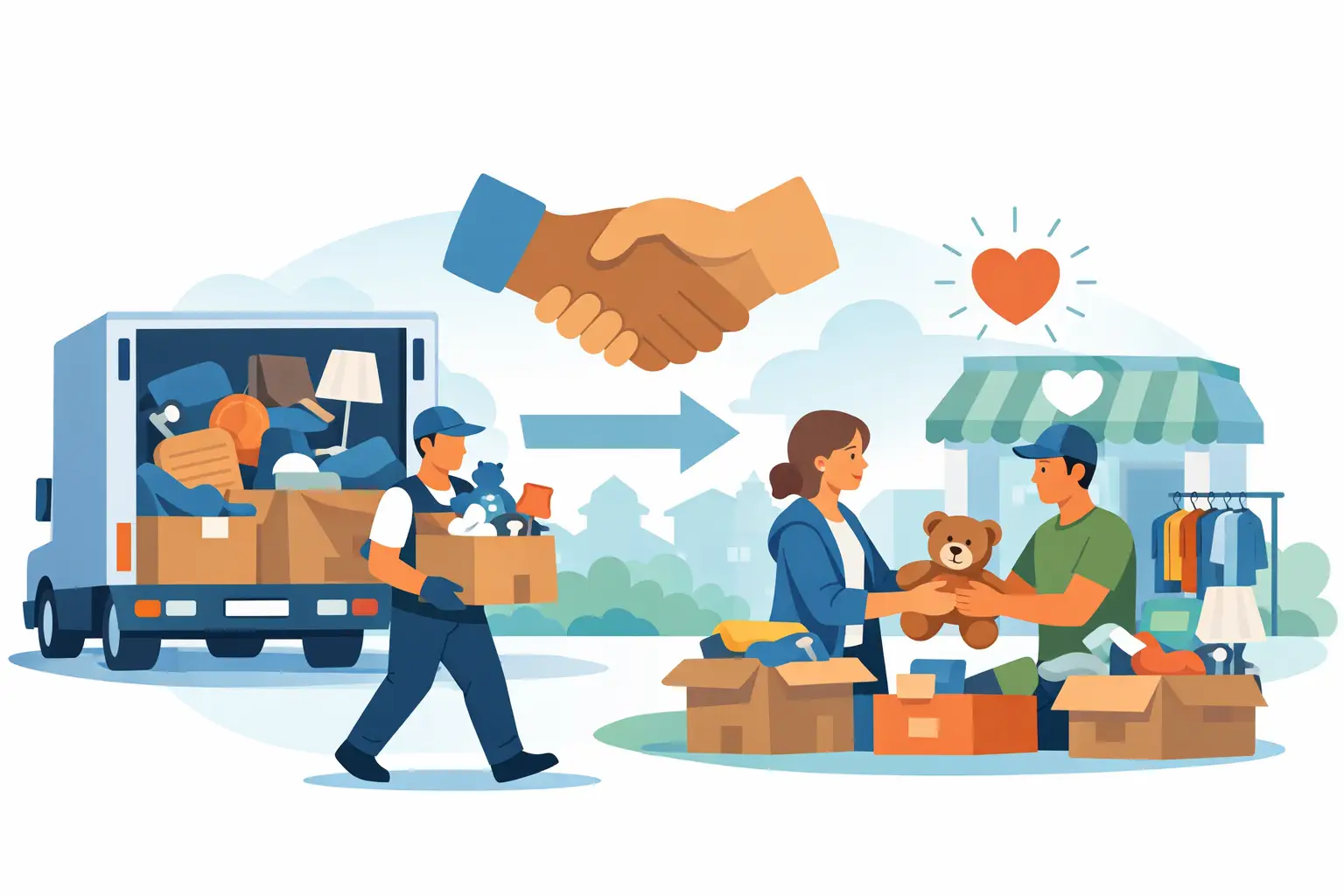
Yes, reputable companies often donate usable furniture, household goods, clothing, appliances, and other accepted items to local charities, thrift organizations, community groups, or reuse outlets. Donation is especially common during moves, estate cleanouts, downsizing projects, and office cleanouts, when customers are getting rid of large volumes of items that may still be useful.
But donation is not the same as simply dropping off everything a customer no longer wants. Charities must protect their staff, volunteers, and shoppers. They also need room for inventory that is likely to be reused or sold. If an item is damaged, heavily stained, unsafe, incomplete, infested, recalled, or too costly to repair, it may be declined.
That is why a good junk removal team sorts with care rather than making blanket promises. The goal is to keep reusable items in circulation whenever possible while still completing the job quickly and safely.
What Items Are Most Likely to Be Donated?
Condition matters more than age. A gently used dresser from ten years ago may be a strong donation candidate. A newer couch with torn fabric, pet odors, or broken supports may not be accepted.
Household furniture in clean, working condition is often a good fit, including tables, chairs, bookcases, nightstands, desks, and dressers. Usable kitchenware, lamps, decor, small appliances, tools, toys, books, and unopened household supplies may also be accepted by the right organization.
Working appliances can sometimes be donated, particularly if they are clean and meet current safety expectations. However, large appliances, older electronics, and certain exercise equipment can be harder to place because organizations may not have storage, testing capacity, or a buyer for them.
Clean clothing, shoes, linens, and accessories are frequently accepted, though policies vary. Bag these items separately when possible. That makes it easier for a removal crew to identify items that may be suitable for donation instead of mixing them into a general debris load.
Items charities may decline
Some items create health, safety, or liability concerns even when they appear usable. Mattresses are a common example. Many donation centers will not take used mattresses because of sanitation concerns, stains, bed bugs, or local restrictions.
Upholstered furniture can also be difficult to donate if it has rips, odors, visible wear, smoke damage, pet damage, or signs of pests. Cribs, car seats, helmets, and some baby gear may be declined because of recalls, missing parts, or changing safety standards.
Hazardous materials are not donation items and should never be placed in a standard junk pickup without prior approval. This includes paint, chemicals, fuel, propane tanks, pesticides, medical waste, and certain batteries. Let the removal company know about these materials before the appointment so they can explain the proper handling options.
Why Donation Cannot Be Guaranteed
Customers often ask for a guarantee that their belongings will go to charity. The request makes sense, especially when an item has sentimental value or still appears useful. Still, a guarantee is not always realistic.
Donation centers decide what they can accept. Their available space can change daily. A charity may take a dining table one week and turn down an identical table the next because its warehouse is full. Seasonal demand matters, too. Furniture and household goods can be easier to place during certain times of year than others.
There is also a practical timing issue. Same-day junk removal is built around fast response. If a customer needs a property cleared today, a crew may need to work within the donation partners' operating hours and acceptance rules. Responsible companies make the effort, but the final decision rests with the receiving organization.
The right question is not, "Will every item be donated?" It is, "Does this company make donation the first option for items that qualify?" That is a more meaningful standard because it reflects the actual process, not a promise that cannot always be kept.
How to Prepare Items for Donation During Junk Removal
A few simple steps can improve the chances that your belongings can be donated. Start by separating items you believe are in good condition from obvious trash, construction debris, and damaged goods. Point them out when the crew arrives.
Clean items do not need to be perfect, but they should be reasonably presentable. Wipe down furniture, empty drawers, remove personal belongings, and make sure appliances are unplugged and accessible. If a piece has a small issue, such as a loose knob or missing shelf, mention it. Clear information helps the crew decide whether the item is suitable for donation or better directed to recycling or disposal.
Do not place important documents, family photos, medication, cash, or valuables in donation boxes. Cleanouts move quickly, and once an item enters a removal load, it can be difficult to retrieve. Take a final walk through closets, cabinets, drawers, and storage bins before the team begins.
If you are donating high-value items, antiques, collectibles, or items that require a tax receipt, consider handling those donations directly. A junk removal company can haul the items, but it may not be able to provide the documentation you need for a tax deduction. Tax rules and charity receipt policies vary, so keep records and confirm details with the receiving organization or a qualified tax professional.
Donation, Recycling, and Disposal Work Together
Donation-first does not mean donation-only. A responsible cleanout often uses several disposal paths. Reusable items may go to a local charity. Metals, cardboard, electronics, and certain appliances may be routed to recycling. Materials that cannot be safely reused or recycled must be disposed of properly.
This matters during large jobs such as estate cleanouts, rental turnovers, renovation debris removal, and commercial office cleanouts. Not every item will fit one category. Trying to force damaged or unsafe items into the donation stream can create more work for charities and may simply shift the disposal burden to them.
The better approach is practical and respectful: donate what can help someone else, recycle what has recoverable material, and dispose of the rest according to local requirements. That keeps the job moving while reducing unnecessary landfill waste.
What to Ask Before Booking a Junk Removal Service
If responsible disposal is a priority, ask direct questions before scheduling. Find out whether the company sorts for donations, what types of items it commonly donates, and whether it works with local organizations. Ask how it handles items that donation centers decline and whether the price includes hauling, labor, and disposal.
Clear answers are a good sign. Be cautious of vague claims that everything will be "taken care of" without explaining what that means. Honest pricing and responsible disposal both depend on a company being straightforward about the limits of donation and the real cost of hauling different materials.
For Jacksonville homeowners, renters, property managers, and small businesses, Extra Mile Junk Removal takes a donation-first approach to usable items while keeping the process fast and clear. The crew can remove the heavy lifting from a stressful cleanout without pretending every item has the same destination.
Before your pickup, set aside what is clean, usable, and ready for a second home. A few minutes of preparation can help your unwanted items do more good than simply taking up space.