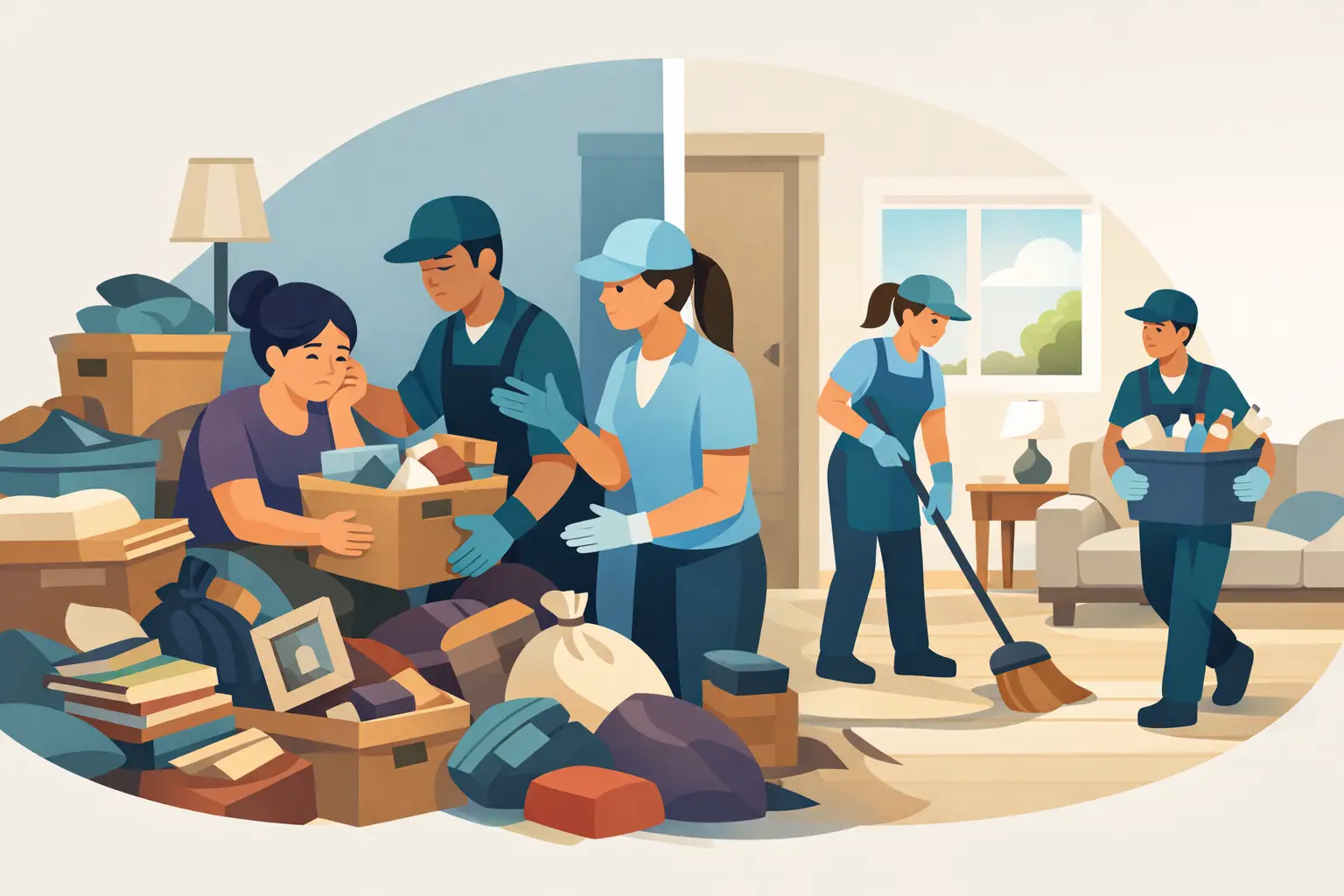
When a home has reached the point where walkways are blocked, rooms can’t be used, or cleanup keeps getting pushed off because it feels too big, hoarder cleanout help is not just about hauling junk. It is about creating a safe, workable plan without adding more stress to an already difficult situation. For many families, landlords, and property managers, the hardest part is knowing where to start.
This kind of cleanout is different from a standard pickup. It usually involves more volume, more time, and more decisions. There may be damaged furniture, bagged trash, old appliances, boxes that have not been opened in years, and items with personal or financial value mixed in. That is why the right approach matters.
What hoarder cleanout help actually includes
At its core, hoarder cleanout help means removing large amounts of unwanted material from a property in a way that is organized, respectful, and efficient. In some homes, that means clearing one room so the resident can move safely again. In others, it means a full-property cleanout before a sale, renovation, tenant turnover, or estate process.
A professional team should do more than show up with a truck. They should assess volume honestly, explain pricing clearly, and work in a way that reduces confusion. Fast service matters, but so does judgment. In these jobs, there is often a difference between obvious trash and items that need a second look.
That is one reason many customers prefer a donation-first company. Not everything in the home belongs in a landfill. Usable furniture, household goods, and certain personal items may still have value to local organizations or community members. Responsible removal helps reduce waste and gives customers one less thing to worry about.
When it makes sense to call for professional hoarder cleanout help
Some people try to handle everything alone and quickly find out the job is bigger than expected. That is especially true when the property has been building up for years. A cleanout can become physically demanding, emotionally loaded, and time-consuming all at once.
It usually makes sense to bring in professionals when access is limited, the volume is more than a few truckloads, or there is a deadline tied to a move, inspection, listing, or tenant transition. Property managers often need the space cleared fast to prepare for repairs or showings. Families dealing with an estate may need help sorting through a home without turning the process into weeks of back-and-forth.
There is also the safety factor. Heavy lifting, unstable stacks, broken furniture, and blocked exits create risks that should not be ignored. If the cleanup feels overwhelming before it even begins, that is a strong sign to get outside help.
The biggest mistake people make
The biggest mistake is treating every item the same.
In a standard garage cleanout, you can move fast and make simple keep-or-toss decisions. In a hoarding-related cleanout, that approach can create conflict, delays, or regret. Some items may be clearly unusable. Others may look insignificant but contain paperwork, family photos, legal documents, or valuables. A rushed crew can make a hard situation worse.
That does not mean the job should drag on forever. It means the process should be structured. The best cleanouts move with purpose while still giving space for smart decisions where needed.
How the process should work
A good cleanout starts with an on-site assessment. That is the only way to understand what needs to be removed, how much labor is involved, and whether there are access issues such as narrow hallways, stairs, detached sheds, or packed garages. Honest pricing starts there. If a company gives a vague number without seeing the situation, that is usually a warning sign.
From there, the scope should be clear. Is this a full-house removal or a targeted cleanup? Are there specific rooms that need priority? Are there items to set aside for family review, donation, or document retrieval? Clear direction saves time and prevents confusion once the work starts.
Then comes the actual removal. In most cases, the goal is to clear material in stages so the space becomes safer and easier to navigate right away. That might mean opening up entrances first, then hallways, then larger living areas. If the property is headed for sale or turnover, the work may focus on getting the structure emptied efficiently so the next phase can begin.
The final piece is disposal. This matters more than many people realize. A responsible junk removal company should look for donation opportunities when items are still usable and separate out what can be diverted instead of throwing everything away by default. That is better for the community and often better for the customer’s peace of mind.
What families and property owners should expect
These jobs are rarely neat at the start. That is normal. What matters is whether the crew brings order to the process.
You should expect straightforward communication, a realistic timeline, and pricing that matches the actual workload. Some cleanouts can be handled in a day. Others take longer, especially if there is a large amount of material or if decision-making is part of the job. Speed is important, but accuracy matters too.
You should also expect professionalism. This is not a situation where customers want sales pressure or vague promises. They want people who show up, explain the plan, and do the work without making the situation more uncomfortable than it already is.
For Jacksonville customers dealing with a stressful home cleanup, that steady, no-drama approach can make a major difference. Extra Mile Junk Removal serves local homeowners, renters, landlords, and property professionals who need fast response and honest pricing when the job cannot wait.
Hoarder cleanout help is not one-size-fits-all
Every property has its own challenges. A small apartment with bagged debris is different from a multi-room home packed wall-to-wall with furniture, boxes, and mixed household contents. A tenant turnover cleanout has different priorities than a family-led cleanup after a loss. In one case, speed may matter most. In another, sorting and sensitivity may carry more weight.
That is why fixed assumptions do not work well here. Some customers need a full reset. Others only need enough cleared out to make the property functional again. The right company should be able to adjust without turning a difficult job into a complicated one.
How to prepare before the crew arrives
You do not need to organize the entire property first. In fact, most people call because they cannot realistically do that on their own. Still, a small amount of preparation can help.
If possible, identify any items that absolutely should not be removed, such as medications, keys, legal documents, family photos, or keepsakes. If another family member needs to review certain rooms or boxes first, say that upfront. If there are building access rules, gate codes, or parking limits, share those early so the job stays on track.
Beyond that, let the crew do the heavy lifting. A quality service should reduce your workload, not add to it.
Choosing the right company for the job
Not every junk removal company is the right fit for this kind of work. You want more than a truck and a disposal fee. You want a team that understands urgency, respects the property, and gives you a clear answer on cost and timing.
Look for same-day or fast-response availability if the situation is time-sensitive. Look for transparent pricing instead of broad estimates that shift later. And look for a company that talks about donation and responsible disposal, because that says a lot about how they handle the work overall.
Veteran-owned businesses often stand out here for a simple reason. Discipline, accountability, and follow-through matter on complicated jobs. When a property needs to be cleared quickly and professionally, those traits are not marketing extras. They are operational advantages.
A cleanout can be the first real step forward
For many customers, the main relief is not just seeing items removed. It is seeing the space become usable again. A doorway opens. A spare room comes back. A property can finally be repaired, sold, rented, or lived in without the weight of everything piled inside.
That kind of progress does not happen because someone found the perfect cleanup checklist. It happens because the job got handled by people who knew how to take action, communicate clearly, and treat the situation with respect.
If you are facing a property that feels too far gone to tackle alone, start with one practical decision. Get the right help, get a clear plan, and let the next step be smaller than the burden you have been carrying.