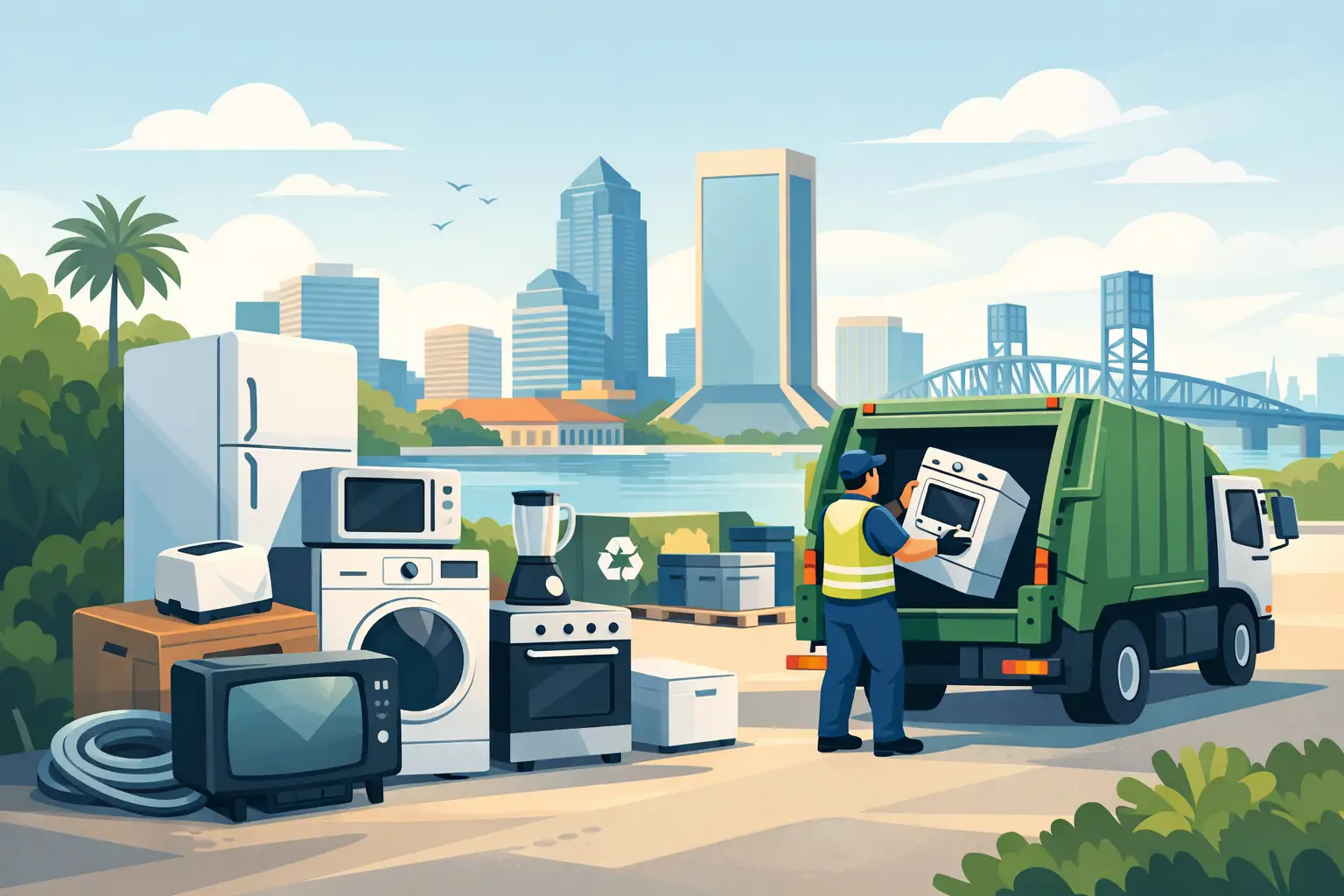
That old refrigerator in the garage is not just taking up space. It may contain refrigerant, heavy components, and materials that cannot go into a regular curbside trash bin. Knowing how to dispose of old appliances the right way protects your property, keeps reusable materials out of the landfill, and saves you from a failed pickup or possible disposal fee.
For Jacksonville homeowners, renters, property managers, and small businesses, the best option depends on the appliance's condition, size, and whether it contains hazardous components. A working washer has a very different next step than a leaking refrigerator or a commercial freezer that has been sitting behind a storefront.
Start With the Appliance's Condition
Before arranging removal, take a quick and honest look at the appliance. If it is clean, complete, and working reliably, it may still have value to a local family, nonprofit, repair shop, or secondhand buyer. Donation is often the best first choice for usable appliances because it extends the item's life instead of treating it as waste.
That said, donation centers usually have standards. A refrigerator with a broken compressor, a stove with damaged wiring, or a washing machine that leaks may not be accepted. Old units with heavy mold, pest contamination, severe rust, or missing major parts are also poor donation candidates. Do not assume that placing an appliance outside with a “free” sign is responsible disposal. It can create a neighborhood eyesore, attract scavengers, and leave you responsible if it remains on the curb.
If the appliance is no longer useful, recycling or professional removal is usually the appropriate path. Metal, glass, wiring, and certain plastic components can often be recovered when the item is handled through the right channel.
How to Dispose of Old Appliances Safely
Safety matters most with heavy appliances and units that use refrigerant. Refrigerators, freezers, air conditioners, dehumidifiers, and some heat-pump equipment need special handling. Their refrigerants must be recovered by qualified technicians before the appliance can be processed as scrap. Never cut refrigerant lines, puncture coils, or try to take apart a cooling appliance yourself.
Unplug the appliance well before removal. If it has an ice maker or water dispenser, turn off the water supply and disconnect the line carefully. Drain standing water from washers, dishwashers, dehumidifiers, and refrigerators. A towel and shallow pan can prevent a messy trail through your home or across a rental unit's floor.
For gas appliances, the situation is different. A gas dryer, stove, oven, or water heater should be disconnected properly before hauling. If you are unsure whether a line is safely capped, contact a licensed professional. Saving money on removal is not worth a gas leak or damaged connection.
Also secure loose doors, shelves, and cords. Tape refrigerator or freezer doors shut before moving them, especially if they will sit outside briefly. Older appliance doors can create a serious safety risk for children and pets. For a unit being stored until pickup, remove the door entirely if practical and safe to do so.
Choose the Right Disposal Route
There is no one disposal method that fits every appliance. The right route comes down to whether the unit works, what it is made of, and how quickly you need the space cleared.
Donate appliances that are genuinely usable
A clean, working appliance may be useful to a local charitable organization, housing program, thrift operation, or community member. Call before transporting it. Ask whether the organization accepts the specific appliance, whether it has age restrictions, and whether pickup is available. Many groups cannot take older refrigerators or major appliances with uncertain repair histories.
Be upfront about defects. A dishwasher that needs a new rack is different from one that floods the kitchen. Honest details help organizations decide whether the appliance is worth accepting and keep the donation process from becoming a burden for someone else.
Use retailer haul-away when replacing an appliance
When buying a new appliance, ask the retailer whether haul-away is available for the old one. This can be convenient because the removal happens during delivery. It is especially useful for large refrigerators, ranges, and laundry sets that are difficult to move through tight hallways.
The trade-off is timing and flexibility. Retailer haul-away may require the old appliance to be disconnected, accessible, and ready at the time of delivery. It also may not help with extra items in the garage, a rental turnover, or an entire property cleanout.
Recycle scrap-ready appliances responsibly
Appliances that no longer work can often be recycled after required refrigerant recovery or other preparation. Scrap facilities may accept metal appliances, but acceptance rules vary. Some require proof that refrigerant has been removed, while others will not take certain items at all.
Call ahead before loading a heavy appliance into a truck. Confirm accepted materials, preparation requirements, hours, and whether there are fees. A trip across Jacksonville with a refrigerator in the bed of a pickup is frustrating if the facility turns it away.
Schedule professional appliance removal
Professional junk removal is often the practical answer when you need an appliance gone quickly, cannot safely move it, or have more than one item to clear. This is common after a move, renovation, estate cleanout, tenant turnover, or kitchen upgrade.
A reputable local crew can remove appliances from garages, kitchens, patios, storage rooms, and small commercial spaces. They can also sort items for donation, recycling, or disposal based on condition and local requirements. That means you do not have to borrow a truck, wrestle a heavy unit down stairs, or guess where each item belongs.
For Jacksonville customers who need fast, straightforward help, Extra Mile Junk Removal offers same-day service when availability allows, honest pricing, and a donation-first approach. The goal is simple: clear the space without treating every appliance like landfill waste.
Avoid These Common Appliance Disposal Mistakes
The biggest mistake is putting a large appliance out with regular household trash without checking local collection rules. Many curbside programs do not accept bulky appliances, particularly refrigerant-containing units. Even where bulk collection is offered, there may be scheduling, preparation, or quantity requirements.
Another common mistake is dragging an appliance across floors without planning the route. Refrigerators and washing machines are heavier than they look, and their weight can gouge flooring, damage door frames, or cause injuries. Measure narrow doorways, clear the path, and use proper equipment if you are moving it yourself.
Do not leave appliances behind at a rental property, vacant home, or commercial space unless the owner has approved it. Property managers and landlords often need a quick reset between tenants, and abandoned appliances can delay cleaning, repairs, or showings. Fast removal keeps the turnover moving.
Finally, do not assume an appliance is worthless because it is old. A working older dryer might be worth donating, while a newer refrigerator with a failed sealed system may be ready for recycling. Condition matters more than age alone.
Plan Ahead for a Faster Pickup
A little preparation makes appliance removal quicker and safer. Know what needs to go, whether each unit is working, and where it is located. Mention stairs, narrow access points, detached garages, gates, or appliances that are still connected to water or gas. Clear information helps you receive an accurate quote and prevents surprises on pickup day.
If you are handling a larger cleanout, group appliances with other unwanted items before scheduling service. Old furniture, boxes, mattresses, electronics, and renovation debris can often be removed during the same visit. One organized pickup is usually easier than managing several separate disposal trips.
The right disposal choice is not always the cheapest option on paper. A free drop-off can become expensive when it requires truck rental, labor, fuel, time off work, and a second trip because the facility will not accept the item. Choose the route that is safe, permitted, and realistic for your schedule.
An old appliance should not become the last obstacle between you and a clean garage, a finished move, or a ready-to-rent property. Handle the disconnects safely, choose donation or recycling when the item qualifies, and get reliable hauling help when the job calls for it.