


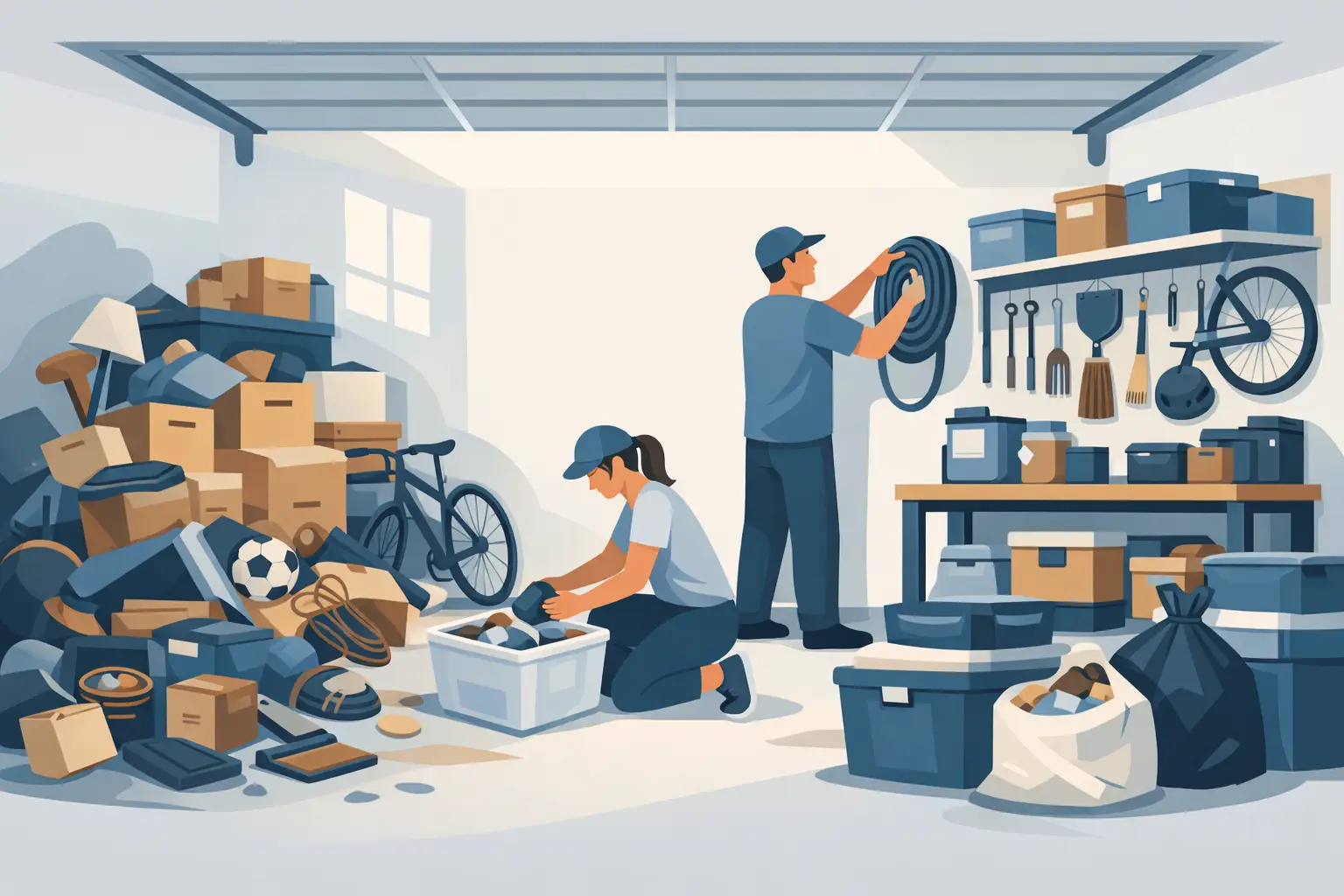
You notice it when the garage stops working like a garage. The car sits in the driveway, the holiday bins are stacked three deep, and one broken chair somehow became permanent. The best ways to declutter a garage are not complicated, but they do require a clear plan and a willingness to make quick decisions.
For most Jacksonville homeowners, the problem is not a lack of effort. It is delayed decisions. A garage becomes the place where move-out leftovers, yard tools, paint cans, old shelving, and "maybe someday" items all end up together. If you try to organize that mess before removing what does not belong there, you usually just move the same clutter from one wall to another.
Start with one rule: clear first, organize second
This is where most garage cleanouts go off track. People buy bins, hooks, and shelves before they know what is actually worth keeping. That adds cost and often makes the job take longer.
A better approach is to empty visible floor space first and sort everything into simple categories: keep, donate, recycle, trash, and haul-away. If an item is broken, unsafe, missing parts, or untouched for years, it probably does not need premium storage space in your garage.
If you are dealing with a packed garage, do not pull out every single item at once unless you have the time to finish the job the same day. For a busy household, it is often smarter to work in zones. Start with one wall, then the back area, then the corners, and finally the overhead shelves or cabinets.
The best ways to declutter a garage without getting stuck
The biggest reason people stall is decision fatigue. A garage holds all kinds of items with different levels of value, use, and emotional attachment. Lawn equipment is practical. Old baby gear is sentimental. Half-used paint cans are just annoying. You need a process that keeps things moving.
1. Set a real purpose for the space
Before you touch a single item, decide what the garage should do for you. Is it mainly for parking? Tool storage? Sports gear? Bulk household supplies? A home workshop?
That answer matters because every garage cannot do everything well. If parking is the priority, floor space becomes non-negotiable. If storage is the priority, then cabinets and wall systems may make sense. If you need both, you will need stricter limits on what stays.
2. Pull out the obvious junk first
Start with the easy wins. Broken furniture, damaged storage bins, scraps from old projects, dead appliances, worn-out rugs, and cardboard that has been sitting for months should be first out.
This matters for momentum. When the first pass is fast, you create room to work and build confidence. You also get a better look at what is really taking up space.
3. Be honest about duplicates
Garages are where duplicates hide. Three rakes. Five partly used fertilizer spreaders. A box of extension cords that do not work. Extra folding chairs you forgot you had.
Keep the best version of what you use. Let the rest go. If you have not used a duplicate in the last year, it is likely just eating square footage.
4. Separate hazardous items from regular junk
Not everything in a garage can go out with household trash. Paint, automotive fluids, pesticides, propane tanks, and certain batteries need special handling. That is especially important in Florida heat, where poor storage can turn a clutter problem into a safety problem.
Set those items aside early so they do not get mixed into your regular keep-or-toss piles. If you are not sure what can be legally discarded curbside, do not guess.
Use storage only after you reduce volume
Once the clutter is down to what you actually plan to keep, then storage solutions become useful. At that stage, they support the space instead of hiding the problem.
Wall-mounted storage is often the best use of a garage because it gets tools, cords, and yard gear off the floor. Clear bins work well for seasonal items, but only if they are labeled in plain language. "Christmas lights" beats "holiday misc." every time.
Open shelving is practical for frequently used items, but it can also attract clutter if you give yourself too much room. Cabinets create a cleaner look, though they cost more and sometimes hide disorganization behind closed doors. It depends on how disciplined your household is with putting things back.
Make donation and recycling part of the plan
One of the best ways to declutter a garage is to stop thinking of every unwanted item as trash. Plenty of garage clutter still has use left in it. Sporting goods, hand tools, small furniture, unopened paint supplies, gardening items, and working appliances may be useful to someone else.
A donation-first mindset can make decisions easier. You are not just getting rid of something. You are moving it out responsibly. That can be especially helpful when clearing out a parent's home, downsizing, or finishing a post-move cleanout.
Recycling matters too, but be practical. Scrap metal, electronics, and cardboard are often worth separating. Rotten particleboard shelving and busted plastic bins are not. The goal is responsible removal, not turning your garage into a second sorting center for weeks.
Know when a DIY garage cleanout stops being efficient
Some garage projects are simple Saturday jobs. Others become full cleanouts involving old mattresses, broken shelving, exercise equipment, renovation debris, and bulky items too heavy or awkward for one person to handle.
That is usually the tipping point where DIY starts costing more in time, stress, and dump runs than expected. If you need to borrow a trailer, recruit help, sort donation items, and figure out disposal rules for multiple materials, the project can drag out fast.
For homeowners, landlords, and property managers, speed often matters as much as cost. A garage that needs to be cleared before a move, listing, tenant turnover, or renovation is not just a storage issue. It is a scheduling issue.
That is where professional junk removal can make sense. A crew can remove bulky items quickly, separate what can be donated, and save you from multiple trips across town. For people who want the job done without spending their whole weekend on it, that is often the cleaner solution.
Common mistakes that make garage clutter come back
A clean garage can slide backward in a month if the system is weak. The most common mistake is keeping too much after the cleanout. The second is storing items by size instead of by use.
Put things where they make sense in real life. Car care items near the car. Yard tools near the garage door. Holiday bins up high. Frequently used tools within reach. If you create a setup that looks neat but is inconvenient, people stop following it.
Another mistake is treating the garage like a holding area for undecided items. That habit rebuilds clutter fast. If something comes into the garage without a clear home or purpose, it usually becomes permanent by accident.
A simple schedule that keeps the garage under control
You do not need a major cleanout every month. You do need a reset plan. For most households, a quick 15-minute check every two weeks is enough to keep clutter from spreading. Toss broken items, collapse stray boxes, and return tools where they belong.
Then do one deeper review every season. Florida weather makes garage conditions tougher on stored items, so it helps to check for moisture damage, rust, pests, and things you no longer use. Small resets prevent another full-scale cleanout later.
If the garage is already past the point of a quick reset, do not overcomplicate it. Start with obvious junk. Remove bulky items early. Keep what supports the way you actually live. If you need help getting heavy or unwanted items out fast, a local team like Extra Mile Junk Removal can save you time and clear the space without the usual runaround.
A garage should make daily life easier, not give you one more thing to avoid every time you get home.