


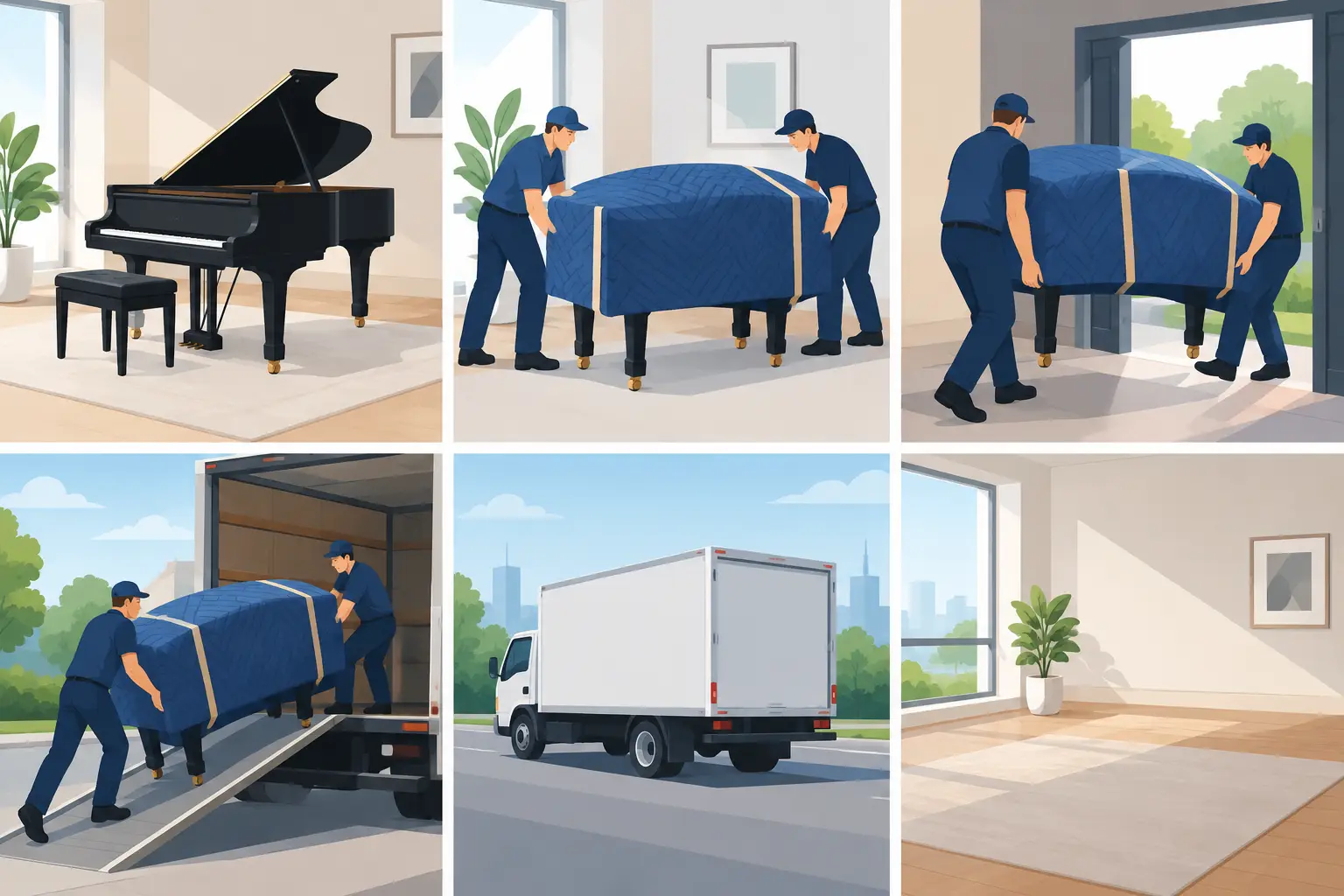
A piano can look like one item on a to-do list. In reality, it is often the heaviest, most awkward item in the house. This piano removal example shows what a professional pickup can look like when a Jacksonville homeowner needs an upright piano out quickly, without risking injuries, wall damage, or a surprise bill.
Picture a typical situation: a family is preparing a home for sale in Mandarin. An old upright piano has sat in the living room for years. It is no longer played, takes up valuable space, and needs to be removed before photos and showings begin. The piano is functional but worn, and the family wants to know whether it can be donated rather than sent straight to disposal.
The job sounds simple until the details come into view. The piano weighs several hundred pounds, the front entry has three steps, and the route passes through a narrow hallway with freshly painted walls. That is where planning matters.
Piano Removal Example: The First Call
A good removal process starts with clear information. The homeowner shares the piano type, approximate location in the home, and a few photos of the route to the door. Photos help identify the factors that affect both safety and pricing: stairs, tight turns, long carry distances, gates, porch steps, and whether the item is on a second floor.
For this example, the piano is an upright on the first floor. There are three front steps and a short walkway to the driveway. No stair carry from an upper level is required, but the team will still need proper equipment and enough room to turn the piano safely.
The homeowner receives a straightforward quote based on the job, not a vague promise that changes once the crew arrives. Honest pricing matters most with heavy-item removal because access conditions can change the labor involved. A piano on a ground floor with a clear path is a different job from one in an upstairs apartment or a home with a steep, winding staircase.
Before booking, the homeowner should mention anything that could affect the pickup. That includes loose porch boards, wet ground, pets, parked vehicles blocking the driveway, or furniture that narrows the path. A few honest details prevent delays on removal day.
Preparing the Home for Pickup
The customer does not need to dismantle or move the piano. In fact, trying to take apart a piano without the right experience can create more risk. Internal components are heavy, the cabinet can shift unexpectedly, and loose pieces may damage floors or walls.
What helps is making a clear route. The family moves a small bench, a floor lamp, and a few decorative items out of the hallway. They secure the dog in another room and leave the driveway open for the removal truck. Those small steps let the crew focus on the safe carry instead of working around obstacles.
If the piano has sentimental value, this is also the time to check the bench, music storage, and nearby drawers for sheet music, photos, or small keepsakes. Once removal begins, the goal is to keep the process moving safely and efficiently.
What Happens on Removal Day
The crew arrives within the scheduled window, confirms the piano and access route, and reviews the price before any work starts. This on-site check protects both the customer and the crew. If the piano or path matches the information provided, the quoted price stands. If there is a condition that was not visible in photos, such as an additional flight of stairs or a blocked exit, the team explains the adjustment before proceeding.
For the upright piano in this example, the crew protects the piano and surrounding surfaces as needed, then positions moving equipment for the carry. The piano is carefully guided through the hallway, out the front door, down the steps, and onto the truck. The work requires controlled movement, clear communication, and a team that knows how to handle concentrated weight.
This is not a job for a pickup truck, a couple of friends, and a rope. Even a smaller upright can cause serious injury if it tips or shifts. It can also leave deep marks in flooring, dent drywall, or damage stair treads. Professional removal is about reducing those risks, not simply getting the piano outside.
Once the piano is loaded, the crew checks the removal path for anything left behind. The living room is open again, the hallway is clear, and the homeowner can move on to staging the house for sale.
Donation First, When the Piano Qualifies
Many customers ask whether an old piano can be donated. The answer depends on its condition, age, playability, and whether a local organization has a current need for it. Donation is a worthwhile option when the piano is structurally sound, reasonably maintained, and likely to be useful to a school, church, nonprofit, or family.
However, not every piano is a donation candidate. Water damage, pest activity, broken structural parts, severe wear, or major tuning and repair needs can make it impractical for a recipient. Moving and restoring a piano costs money, so organizations must be selective. A responsible removal company should not promise donation before evaluating whether it is realistic.
In this example, the piano is in fair condition but has several broken keys and needs extensive work. It is not accepted for donation. The homeowner is told that clearly, without pressure or false promises. The crew then follows the most responsible available disposal route for materials that cannot be reused.
That honest answer is often more helpful than a vague assurance. A donation-first approach means pursuing reuse when it makes sense, while handling the rest responsibly when it does not.
Why Access Changes the Cost
Piano removal pricing is not one-size-fits-all. Weight is a major factor, but access is often the bigger issue. The same upright piano can take far more time and labor when it must be moved down a second-story stairway, through a narrow condominium corridor, or across a long backyard route.
A few conditions commonly affect the quote:
- Piano type and approximate size, including upright, baby grand, or larger grand models
- Number of stairs, steep steps, tight landings, and narrow turns
- Distance from the piano to the truck and any obstacles along the route
- Urgency, especially when a same-day pickup is needed before a move, closing, or tenant turnover
The right question is not simply, "What does piano removal cost?" It is, "What will it take to remove this piano safely from this property?" A transparent quote should reflect that answer.
When Same-Day Piano Removal Makes Sense
Sometimes a piano can wait. Other times, it cannot. A property manager may need it removed before new tenants arrive. A real estate agent may need a room cleared before listing photos. A homeowner may be finishing a renovation, dealing with an estate cleanout, or making space for an aging family member to move in.
Same-day service is useful when timing is tight, but availability depends on the schedule, crew capacity, and job complexity. Calling early and sharing clear photos gives the best chance of securing a fast pickup. For heavy items, speed should never replace safe planning.
Extra Mile Junk Removal handles piano pickups with the same practical approach used for any difficult removal job: show up prepared, explain the price clearly, protect the property, and look for responsible disposal options first.
A piano does not have to stay in the way because moving it feels overwhelming. With a clear path, accurate details, and an experienced removal crew, that crowded living room can be ready for its next purpose by the end of the day.