

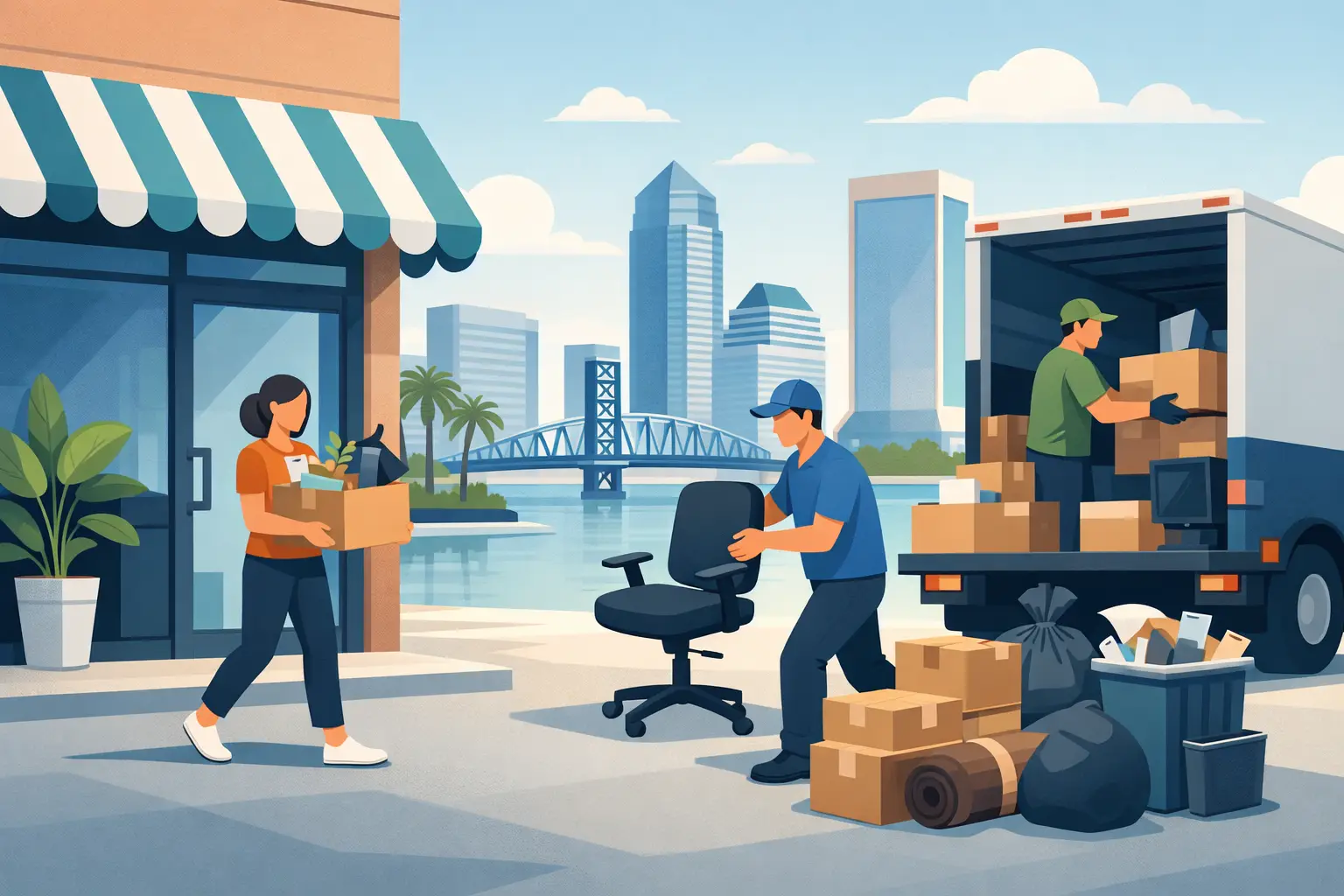
A small business cleanout is rarely just a pile of old furniture and boxes. It may mean clearing a storefront after a move, turning over a rental unit, making room for inventory, or closing a workspace on a tight deadline. This small business cleanout guide helps Jacksonville owners make a clear plan, protect important information, and remove unwanted items without dragging the job out for weeks.
Start With the Deadline and the End Goal
Before moving a single item, decide what “done” looks like. A restaurant clearing a storage room has different needs than an office relocating across town. You may need an empty space for a landlord walk-through, a clean back room before new inventory arrives, or a fully cleared suite ready for the next tenant.
Work backward from the final deadline. Include the date the space must be empty, any building access rules, elevator reservations, loading-zone restrictions, and the time needed for cleaning or repairs afterward. In Jacksonville, heat, afternoon storms, and busy commercial corridors can make loading slower than expected. A realistic schedule prevents a last-minute rush.
If the cleanout involves a lease ending, read the move-out requirements before scheduling removal. Some property managers require carpet cleaning, debris-free dumpsters, or proof that certain materials were handled properly. Knowing those rules early avoids return trips and surprise charges.
Build a Practical Small Business Cleanout Plan
Walk through the property with a phone, clipboard, or simple spreadsheet. Divide the space by area: lobby, offices, storage rooms, break room, warehouse, and exterior areas. Take photos of large items and note anything that may need special handling.
As you sort, give every item one of five destinations:
- Keep for the new location or future use
- Sell if it has enough value to justify the time
- Donate if it is clean, usable, and accepted by a local organization
- Recycle if the material or equipment can be processed responsibly
- Remove and dispose of if it is damaged, obsolete, or not accepted elsewhere
The goal is not to turn every old desk or shelf into a project. Selling items can recover some money, but it also takes time, messages, pickups, and storage. If your deadline is close, the cost of waiting may be higher than the resale value. Be honest about what is worth listing and what needs to go.
Keep a separate area for items you are retaining. Label those items clearly so they do not get loaded by mistake. This matters most with boxed records, tools, company equipment, and inventory that all look similar during a fast cleanout.
Identify Items That Need Special Attention
Not every item belongs in a standard junk load. Electronics, batteries, fluorescent bulbs, paint, chemicals, propane tanks, and certain commercial equipment may have specific disposal requirements. Do not leave these items until the end and assume they can go with everything else.
Computer equipment deserves extra care. Before removing laptops, desktops, printers, point-of-sale systems, and external drives, back up what you need and erase confidential information. Customer records, employee files, passwords, payment information, and tax documents should never be left on a device headed for disposal or donation.
For paper records, separate documents that should be retained, shredded, or securely destroyed. A cleanout can create unnecessary risk if old files are tossed into open boxes or a dumpster. Assign one person to make final decisions on sensitive materials instead of asking a removal crew to guess what is important.
Plan Around Your Business Operations
The quickest cleanout is not always the best cleanout if it interrupts customers, staff, or deliveries. A retail business may need removal after closing. An office may need a weekend pickup to avoid blocking employees. A property manager may need a clear unit between tenants with little notice.
Choose a removal window that protects normal operations. Let employees know which areas will be off-limits, move customer-facing materials out of the way, and make sure there is a clear route from the items to the loading area. If your building has a shared parking lot or narrow loading zone, coordinate with the property manager ahead of time.
For larger jobs, stage items near the exit only if doing so does not create a safety problem or block fire routes. Staging can speed up loading, but it can also make a business look closed or disorganized if it is done too early. It depends on the layout of the property and how much foot traffic you have.
Get Clear About Pricing Before Pickup
A good cleanout quote should be understandable. Ask what the price includes, how volume is measured, whether labor and hauling are included, and whether certain items may carry additional disposal fees. Photos and a description of the job can help a junk removal company provide a more accurate estimate before arrival.
Be upfront about stairs, long carries, heavy furniture, loading restrictions, and bulky equipment. A broken commercial refrigerator, a packed storage room, or a third-floor office with no elevator can affect the scope of work. Clear details lead to honest pricing and fewer surprises on pickup day.
The lowest quote is not always the lowest final cost. A cheap option can become expensive if it leaves debris behind, misses the agreed time window, or sends usable items straight to the landfill when donation was possible. Look for a company that explains the process, communicates clearly, and respects the property.
Make Donation and Recycling Part of the Plan
Usable desks, chairs, shelving, filing cabinets, office supplies, and small appliances may still serve someone else. Donation-first removal is a practical way to reduce waste, but it works best when items are clean, functional, and ready for another use.
Do not assume every organization can accept every item. Donation needs change, and some items may be declined because of condition, size, safety concerns, or available space. That is why a responsible removal plan includes both donation opportunities and proper disposal for items that cannot be reused.
Recycling can also make sense for metal fixtures, electronics, cardboard, and other recoverable materials. Still, recycling is not automatic for every item. Materials often need to be separated, and some commercial equipment requires a specialized facility. The right approach is to identify likely donation and recycling items early, then let the removal plan account for what remains.
Extra Mile Junk Removal takes a donation-first approach whenever items are suitable for reuse, while providing the fast, professional hauling local businesses need when time is short.
Prepare the Space for Pickup Day
The day before removal, do one final walk-through. Open drawers, cabinets, closets, and storage cages. Check behind doors and under desks. The most commonly forgotten items are keys, lease documents, tools, personal belongings, spare electronics, and paperwork tucked into filing cabinets.
Make sure the person authorized to approve the job is available by phone or on-site. Questions can come up when crews find an item that was not included in the original plan. Quick decisions keep the work moving and prevent the team from removing something you meant to keep.
Clear access where possible. Reserve parking if your property allows it, unlock gates, and alert building management if the crew needs access to a loading dock or freight elevator. Small preparations can save a great deal of time when the truck arrives.
Don’t Wait Until the Cleanout Becomes an Emergency
Some cleanouts are planned months ahead. Others happen because a tenant leaves behind furniture, a sale falls through, a renovation starts early, or a landlord gives a firm move-out date. Same-day service can be a major advantage in those situations, but even a fast response works better when you know what must stay, what must go, and what needs special handling.
A clean business space gives you room to make the next decision, whether that means reopening, relocating, remodeling, or handing over the keys. Start with a clear deadline, protect what matters, and let the unwanted items leave without taking more of your time than they already have.